

Engineered stone and silica dust: HSE 2026/27 inspection alert
HSE has issued prohibition notices and updated COSHH guidance targeting dry-cutting engineered stone and the resulting engineered stone silica. This article explains the risks, what the HSE action means for trades and landlords, and practical steps you should take now.

HSE has issued prohibition notices and updated COSHH guidance targeting dry-cutting engineered stone

On 25 June 2026 the Health and Safety Executive (HSE) issued its first prohibition notices relating to unsafe work with engineered stone and respirable crystalline silica (RCS). Those notices, together with updated COSHH guidance that effectively bans dry-cutting engineered stone where it creates airborne dust, form the centrepiece of the HSE inspection campaign for 2026/27. The measures respond to a well established harm: breathing fine silica dust can cause silicosis, lung cancer and other chronic respiratory disease.
This note explains what the HSE action means in practice for trades, small employers, landlords and homeowners; summarises the health risks; and sets out concise, practical steps to reduce exposure, meet COSHH duties and decide when an occupational hygiene inspection or testing is appropriate.
What HSE action means for you

The prohibition notices and revised guidance make clear that dry-cutting engineered stone is no longer an acceptable route where it generates airborne dust. HSE action directly targets engineered stone silica and associated work processes. Inspectors will look for worked examples of poor controls, missing risk assessments and evidence that employers or contractors are not meeting COSHH expectations.
Key implications:
- For employers and self-employed trades: you must prevent or adequately control exposure to respirable crystalline silica when working with engineered stone. Dry-cutting is likely to be non-compliant unless an alternative demonstrably safe system is in place.
- For landlords and property managers: contractors you hire must demonstrate suitable controls and documentation. Do not engage contractors who carry out uncontrolled dry-cutting on site.
- For homeowners and tenants: the risk to householders is low unless cutting or modification happens at home without controls. Where engineered stone is altered on site, check that contractors use appropriate controls before work starts.
HSE inspectors will expect documented COSHH risk assessments, method statements, control measures (for example wet cutting, local exhaust ventilation (LEV) and exclusion of bystanders), maintenance records and exposure monitoring where relevant. See HSE silica guidance and HSE COSHH for official detail.
Health risks from engineered stone silica
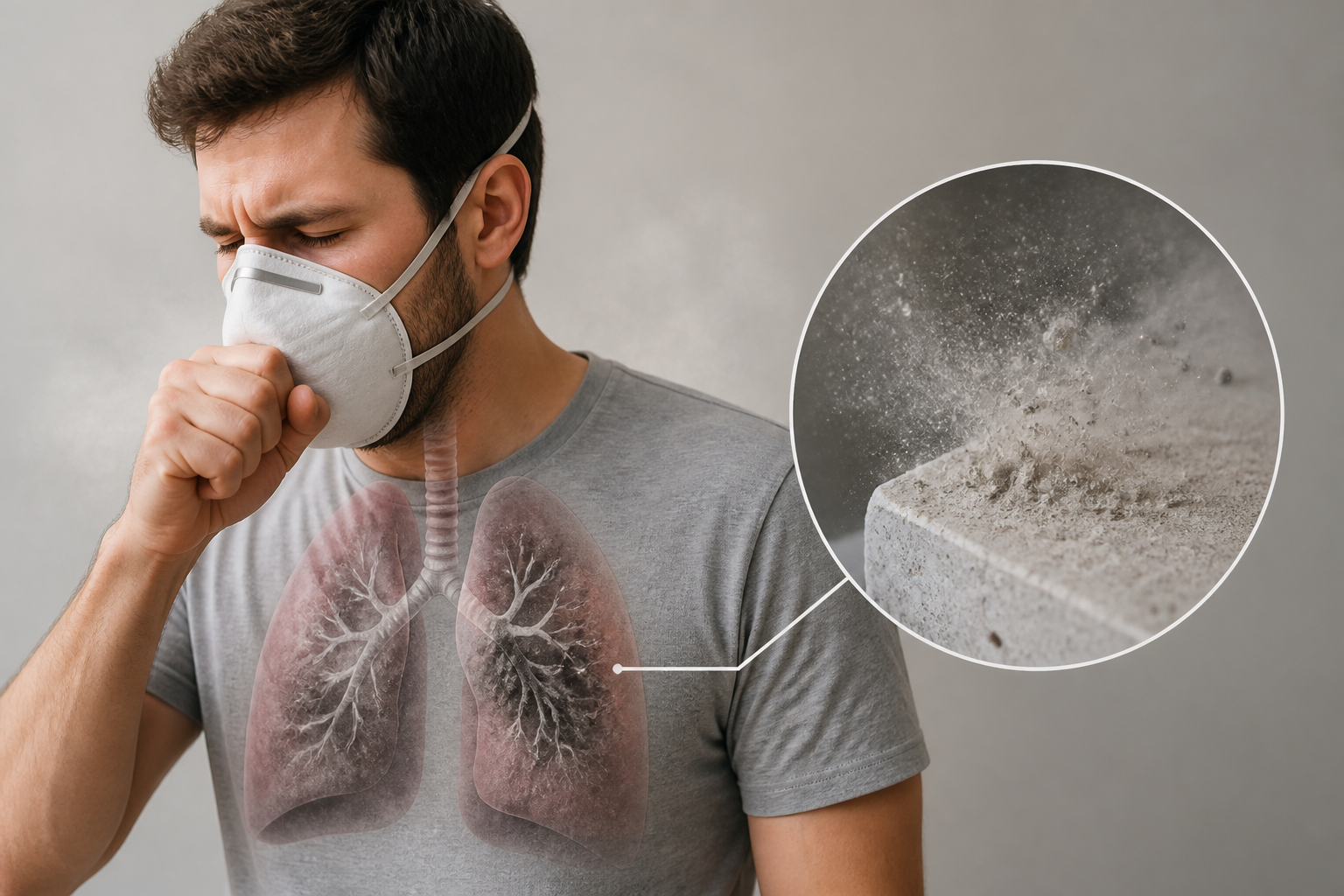
Engineered stone contains a high proportion of crystalline silica. Cutting, grinding or polishing without controls produces very fine respirable dust that penetrates deep into the lungs. Long-term or high short-term exposures increase the risk of irreversible lung disease.
Health effects associated with RCS exposure include:
- Silicosis, a progressive scarring of the lungs that can be disabling and irreversible.
- An increased risk of lung cancer and chronic obstructive pulmonary disease (COPD).
- Other conditions linked to silica exposure, including some kidney disease associations.
These harms are preventable. HSE guidance requires measures to reduce airborne dust to as low as reasonably practicable, and monitoring and health surveillance where significant exposure can occur.
Immediate steps for trades and landlords

Take the following steps immediately if you work with or manage engineered stone work:
- Stop dry-cutting. Suspend any dry-cutting of engineered stone until adequate controls are in place.
- Carry out a COSHH risk assessment. Document the task, likely exposures, control measures and residual risks; keep the assessment with the project file.
- Use suitable controls. Preferred measures are wet cutting or integrated water suppression, effective LEV designed and commissioned for the task, and physical containment to separate workers and bystanders from dust.
- Provide and maintain RPE. Where residual exposure remains, supply appropriate respiratory protective equipment with fit-testing and maintenance records.
- Arrange exposure monitoring and health surveillance. If controls may not fully prevent exposure, commission task-based air monitoring for RCS and enrol workers in health surveillance as advised by occupational health professionals.
- Check contractor competence. Require method statements, COSHH assessments, monitoring records and evidence of LEV commissioning and RPE fit-testing before work begins.
A focused exposure assessment typically includes task observation, task-based air sampling for RCS using recognised methods, review of engineering controls and RPE, and a short technical report with prioritised corrective actions and verification steps. Our team recommends this approach where visible dust, occupied buildings or regular engineered stone work are present.
Practical checks and when to act
Use this quick checklist to decide when to seek professional assessment:
- Visible dust clouds or settled dust after cutting indicate controls are inadequate - stop work and arrange assessment.
- Uncontrolled work in occupied buildings where tenants, staff or bystanders could be exposed requires immediate remediation.
- Contractors who cannot produce risk assessments, method statements, monitoring records or evidence of LEV and fit-testing should not be engaged.
- Workers reporting persistent cough or breathing problems should be referred to occupational health and the work arrangements reviewed.
When commissioning an inspection, expect a competent assessment to include:
- A review of documented COSHH assessments and method statements.
- Task observation during typical working practices.
- Task-based air sampling for respirable crystalline silica with laboratory analysis.
- Evaluation of engineering controls (wet methods, LEV), RPE selection and maintenance records.
- Clear corrective actions, prioritised by risk, with timescales and verification steps.
For landlords and homeowners, a short pre-works check that confirms contractors will use wet cutting, LEV and appropriate RPE will usually prevent problems. For businesses and trades where engineered stone work is regular, formal exposure assessment and ongoing monitoring provide risk visibility and support compliance with COSHH obligations.