

Industrial Noise Risk: Stop Treating Industrial Noise as an Unavoidable Problem
Industrial noise is not an unavoidable price of production. Sysco Environmental explains how UK employers can assess personal exposure, engineer quieter work and use hearing protection as part of—not instead of—effective control.

In Brief

- The Control of Noise at Work Regulations 2005 set action values at 80 and 85 dB(A), with an exposure limit value of 87 dB(A).
- Risk assessment must consider personal daily or weekly exposure, peak sound, vulnerable workers and interference with warnings.
- Employers must eliminate noise at source or reduce it so far as reasonably practicable.
- Hearing protection is a residual control and must be suitable, compatible, fitted and managed.
- Health surveillance can detect effects and test the programme, but it does not make excessive exposure acceptable.
Noise Is an Exposure, Not Just a Sound Level

Factories, workshops, quarries, utilities and construction sites often contain presses, saws, impact tools, fans, compressors and mobile plant. Their sound becomes familiar, yet repeated exposure can permanently damage hearing. Noise can also mask alarms and speech, increase fatigue and contribute to errors.
A displayed decibel value does not describe risk on its own. Personal exposure combines sound level with duration across the working day or week. Because the decibel scale is logarithmic, apparently modest increases represent substantial changes in sound energy. Short peak events also need separate consideration.
The Control of Noise at Work Regulations 2005 require employers to assess and control risk. Lower exposure action values are 80 dB(A) daily or weekly and 135 dB(C) peak. Upper values are 85 dB(A) and 137 dB(C). Limit values are 87 dB(A) and 140 dB(C), taking hearing protection into account. Action values are not safe/unsafe boundaries or design targets.
Build a Representative Assessment

Start with work patterns. Identify noisy tasks, people exposed, duration, variation between shifts, maintenance and foreseeable abnormal work. Note whether noise interferes with communication or warnings and consider workers with existing hearing difficulty or other vulnerability.
Screening observations and reliable machinery data help determine whether measurements are needed. If people must raise their voices at close range, noise deserves investigation, but the voice test cannot quantify exposure. Measurements should be planned and interpreted by someone competent. A sound-level meter supports task assessment; personal dosimetry can help where workers move between sources. Neither is useful without representative observation and time data.
Record operating state, production rate, distance, room conditions and uncertainty. Do not subtract assumed ear-defender performance when comparing exposure with action values. Reassess after changes to plant, process, layout, working time or maintenance condition.
Reduce Noise at Source
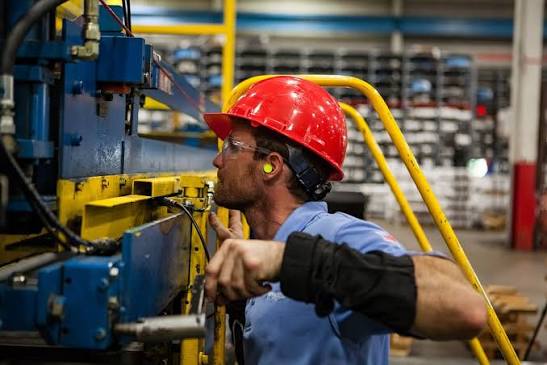
The legal priority is elimination or reduction so far as reasonably practicable. Ask whether the noisy operation is necessary. Replace impact with pressing, mechanical conveying with quieter methods, or compressed-air cleaning with vacuum cleaning. Specify low-noise performance when buying plant; retrofitting is often harder and more expensive.
Engineering options include damping vibrating panels, isolating vibration, balancing rotating equipment, fitting silencers, reducing unnecessary speeds, enclosing sources and installing acoustic screens. Enclosures need sealed gaps, suitable viewing and access, and ventilation that does not create a new noise path. Screens work only where geometry prevents sound travelling around them.
Maintenance is noise control. Worn bearings, loose guards, damaged silencers and air leaks can raise exposure. Include acoustic condition in preventive maintenance and give operators a route to report change. After modification, measure again under comparable conditions.
Separate people through remote operation, quiet refuges or relocation of workstations. Reduce exposure time where source control cannot complete the job, but do not rotate several people through the same avoidable hazard. At or above the upper action value, a planned programme of technical and organisational measures is required.
Use Hearing Protection Correctly

Provide hearing protection where required, while continuing source-control work. Selection should consider frequency content, exposure, communication, warning signals, comfort, hygiene and compatibility with helmets, eyewear and respiratory protection. The highest marked attenuation is not automatically best: over-protection can isolate workers and encourage removal.
Real-world protection is often below laboratory ratings because of fit, wear and interference. Offer suitable choices, train users, inspect condition and supervise use. Fit testing can provide valuable evidence. Define and mark hearing-protection zones at or above the upper action value and manage entry by employees, contractors and visitors.
Information, Health Surveillance and Assurance

Workers should understand the risk, assessment findings, action values, controls, correct protector use and signs of hearing damage. Consultation improves equipment selection and reveals intermittent tasks that surveys miss.
Where the assessment identifies a risk to health, provide suitable health surveillance, normally hearing checks. Establish a baseline where appropriate, arrange competent interpretation and act on adverse findings. Protect medical confidentiality while using anonymised trends to review controls. Surveillance detects possible harm; it cannot replace exposure reduction.
An effective programme has measurable ownership. Track engineering actions, maintenance defects, protector fit, training, survey coverage and surveillance referrals. Investigate threshold shifts, communication incidents and complaints. Review whether controls remain effective during overtime, breakdowns and production changes.
Sysco Environmental provides occupational-noise surveys, exposure interpretation and practical control recommendations for UK workplaces. The most valuable result is not a noise map alone, but a prioritised route from evidence to quieter plant and verified lower exposure.
Industrial noise should be designed out wherever practicable, contained where it remains, and managed with competent assessment. Hearing protection then provides the final layer rather than carrying the entire burden.
Turn Survey Data into an Engineering Plan
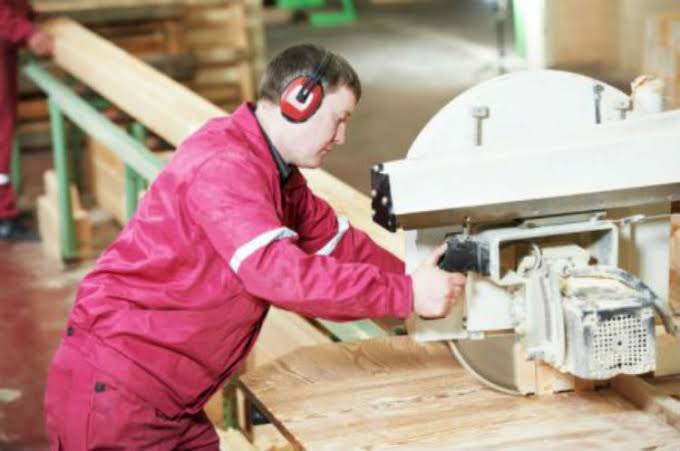
A survey should enable decisions. Break the daily exposure into task contributions and identify which sources dominate. A machine that is loud but used briefly may contribute less than a moderately noisy process running all shift; conversely, a short high-level task may still warrant urgent control. Present results alongside uncertainty, photographs or location information and practical priorities.
Rank proposals by the reduction they can realistically achieve, the number of people protected and how reliably the measure will operate. Quick repairs can proceed while larger capital work is designed. Assign an owner, budget route and completion date. Where an engineering measure is delayed, record the interim protection and the reason the permanent solution remains outstanding.
Noise maps can communicate area conditions but must not be read as personal-exposure maps. Workers move, sources cycle and reflective environments vary. Link area information to task durations and individual work patterns. Likewise, a smartphone application may help demonstrate that sound deserves attention, but it is not automatically suitable evidence for a statutory assessment.
Design and Procurement Opportunities
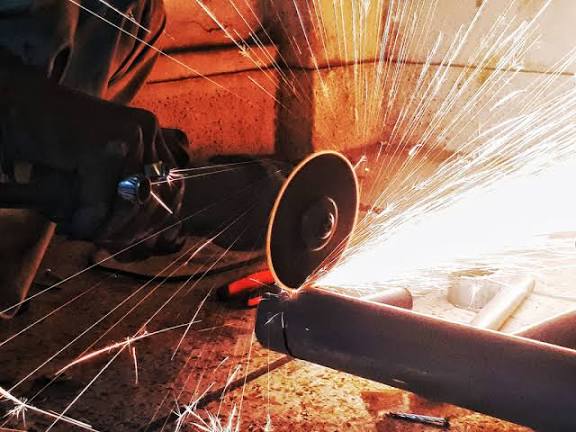
Noise control is most effective before equipment reaches the factory floor. Purchasing specifications can require suppliers to declare sound-emission information, describe test conditions and identify noise-reduction features. Compare machinery doing the same job and include installation, foundation, guarding, extraction and operating load in the review. A quiet machine can become noisy when rigidly connected to a resonant structure.
Design layouts with distance, barriers and occupancy in mind. Keep continuously occupied workstations away from dominant sources and avoid placing noisy plant beside reflective corners. Route material flow to reduce drops and impacts. Provide access for maintenance so acoustic panels are not routinely removed and left off. Commission the complete installation under realistic load, not the machine in isolation.
When modifying equipment, involve operators and maintenance staff. A technically effective enclosure that obstructs adjustment will be opened; a silencer that clogs will be bypassed. Controls must accommodate cleaning, fault finding, heat removal and emergency access. Trials can reveal unintended consequences before a solution is standardised.
Communication and Safety-Critical Signals

Hearing damage is not the only relevant outcome. Noise may prevent people hearing vehicle movements, shouted warnings, alarms or abnormal machinery sounds. The assessment should identify safety-critical communication and test it under representative production while required hearing protection is worn.
Do not solve this automatically by selecting less protection. First reduce background noise and improve the communication system. Visual beacons, suitably designed alarms, radio systems or level-dependent protectors may help, but each requires assessment. Alarm audibility and recognisability should be verified for the people, locations and conditions concerned, including those with hearing impairment.
Teams should agree clear hand signals and communication protocols where speech is unreliable. Avoid requiring workers to remove protectors for conversation. Supervisors need to notice when communication failures, near misses or repeated misunderstandings indicate that arrangements are inadequate.
Contractors, Visitors and Non-Routine Work

Short visits can still involve high peak sound or entry into mandatory protection zones. Provide contractors and visitors with suitable information and protection, confirm compatibility with their other PPE and control where they may go. Contractors bringing powered tools should supply relevant noise information, but the host still needs to understand combined site exposure and coordination.
Shutdowns and maintenance often alter the noise profile. Guards or enclosures may be open, several tools may operate together and shifts may be extended. Assess these activities during planning, provide temporary acoustic controls where practicable and measure representative work. Emergency repairs require proportionate arrangements rather than an assumption that short duration means negligible risk.
Review purchased services as well as equipment. Contracts can specify quieter methods, exposure information and compliance with site zones. Good coordination prevents one employer’s activity imposing uncontrolled noise on another workforce.
What Good Evidence Looks Like

A defensible noise-management record connects the assessment to action. It identifies exposed groups, representative conditions, instruments and calibration, assumptions, uncertainty, control priorities and review triggers. It also records consultation and explains why selected measures are reasonably practicable.
Effectiveness evidence comes from repeat measurement, inspection and behaviour. Has exposure fallen? Are enclosure doors closed? Are silencers maintained? Do workers obtain a good protector fit? Are hearing-check results stable? If not, the programme needs correction even if every document is present.