

Can You Prove Hearing Protection Fits Each Worker?
A laboratory rating cannot show how an earplug performs for an individual at work. Sysco Environmental explains how fit testing can strengthen a UK hearing-conservation programme without distracting from the duty to control noise at source.
In Brief
- The Control of Noise at Work Regulations 2005 prioritise elimination and reduction of noise; hearing protection is not a substitute for technical and organisational control.
- Manufacturer attenuation data may overstate real-world protection because fit, condition, other equipment and wearing time vary.
- Individual hearing-protection fit testing can provide a personal attenuation result and targeted training, but UK law does not prescribe it for every wearer.
- Employers should use fit-test evidence within a wider programme covering assessment, control, hearing-protection zones, training, maintenance and health surveillance.
The Rating on the Box Is Only a Starting Point
Hearing protection is often selected from a single number rating and issued after a noise survey. That process can appear complete, yet the stated performance comes from standardised testing rather than the exact worker, device and conditions on site.
Ear canals differ. Plugs may be inserted too shallowly, reused beyond their service life or loosened during a shift. Spectacle arms, hair, headwear and other personal protective equipment can break an earmuff seal. Even a technically suitable protector fails during every period it is removed in a noisy area.
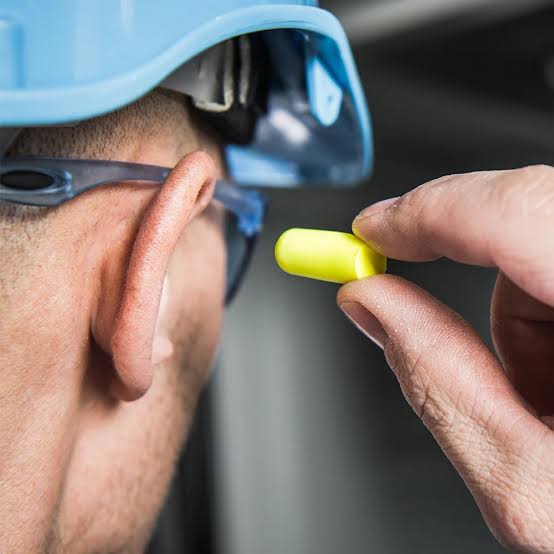
Individual fit testing helps expose that gap. It can estimate the attenuation achieved by a specific person wearing a specific protector and create immediate feedback. The result is useful evidence, but it must not turn a programme centred on noise reduction into one centred on personal protective equipment.
Start With the Legal Control Strategy
In Great Britain, the Control of Noise at Work Regulations 2005 require employers to assess risk and eliminate noise exposure at source or reduce it as low as reasonably practicable. The lower exposure action values are a daily or weekly personal noise exposure of 80 dB(A) and peak sound pressure of 135 dB(C). The upper values are 85 dB(A) and 137 dB(C). Exposure limit values, taking hearing protection into account, are 87 dB(A) and 140 dB(C).
At or above the lower action values, suitable personal hearing protection must be made available on request. At or above the upper action values, employers must provide protection, establish hearing-protection zones where appropriate and ensure protection is used. Employees exposed at or above the upper values are also within the health-surveillance provisions where risk assessment identifies a health risk.
These numbers do not authorise an employer to tolerate avoidable noise. Regulation 6 requires a programme of organisational and technical measures when upper action values are likely to be exceeded. Hearing protection addresses residual exposure while those measures operate.
Northern Ireland has separately administered noise regulations with similar principles. Employers should check the applicable instrument and regulator for each site.
Select Protection for the Actual Noise
Begin with competent noise assessment. Identify daily or weekly exposure, peak noise, frequency characteristics and the tasks that dominate dose. A protector selected without those facts may underprotect, overprotect or be inappropriate for significant low-frequency noise.
HSE provides a simple selection table based on A-weighted task noise and single number rating, but describes it as an indication rather than a substitute for standardised calculation. HSE also advises aiming for a protected level below 85 dB at the ear while avoiding excessive attenuation that creates isolation or discourages use.
Consider communication, warning signals, comfort, hygiene and compatibility. Offer a suitable choice because one plug does not fit every ear. For intermittent exposure, a protector that can be fitted reliably and worn consistently may outperform one with a higher nominal rating that is repeatedly removed.
Document the basis of selection. Record noise data, calculation method, assumed real-world adjustment, compatibility checks and user group. Reassess when plant, process, working time or equipment changes.
Account for Real-World Performance
HSE states that protectors are likely to provide less protection in real use than manufacturers’ standardised data predict. Its guidance advises a 4 dB real-world allowance when using calculated attenuation, except for peak performance. This adjustment recognises variation but does not prove the result for an individual.
Fit testing adds person-specific evidence. Systems use different methods, including microphone measurements and subjective listening tests. Outputs may be expressed as a personal attenuation rating or another system-specific value. Employers must understand what the method measures, its uncertainty and whether the result can be compared appropriately with the workplace noise assessment.
A pass/fail number should never be accepted without checking the test protocol. Was the worker using their normal protector? Did they fit it themselves? Does the method assess both ears? Is the target derived from representative exposure? Can the equipment test the chosen plug or muff? The provider should explain limitations and quality controls.
Use Fit Testing as Practical Training
The greatest value may be the learning conversation. Ask the worker to fit the protector as they normally would, then test it. If attenuation is insufficient, provide coaching and repeat the test. A changed result makes the effect of insertion depth, rolling technique or earmuff seal tangible.
Where technique does not resolve the problem, try another size, form or type. Record the model that achieves suitable attenuation and remains compatible with the task. Do not pressure a worker to persist with a device that cannot be fitted comfortably and reliably.
Training should cover why protection is needed, where and when it must be worn, correct fitting, storage, cleaning, replacement and defect reporting. Workers should understand that intermittent removal can sharply reduce overall protection. Supervisors need competence to recognise poor fitting and damaged equipment.
Fit testing should be supportive, not punitive. A poor initial result identifies a programme problem to solve. Blaming the wearer discourages openness and may conceal design, selection or communication failures.
Decide Who and When to Test
Although individual fit testing is not a universal statutory requirement in Great Britain, it can be proportionate where reliable protection matters. Prioritise workers with high residual exposures, difficult-to-fit protection, dual-protection arrangements, repeated fitting problems or compatibility challenges.
Test at initial issue where the programme adopts fit testing, after changing model or size, and after a result or observation indicates doubt. Periodic retesting can confirm continued competence. Establish risk-based intervals rather than presenting one frequency as legally prescribed.
Include temporary workers and contractors where the host controls the noisy environment or supplies protection. Do not assume previous training applies to the device used on the current site.
Fit-test records should identify the wearer, protector, method, date, result, target and actions, while respecting data-protection and employment requirements. Retain only necessary information, restrict access and explain how records will be used.
Keep Engineering Control at the Centre
Noise control starts with quieter purchasing, process change and elimination of unnecessary impact or compressed-air noise. Enclose sources, isolate vibration, improve damping, maintain equipment and separate people from noisy areas. Use task measurements to identify which intervention will reduce dose most.
Administrative measures such as limiting time may assist but are vulnerable to production changes and require supervision. Hearing protection remains the final barrier. A strong fit-test result does not remove the obligation to pursue reasonably practicable reductions at source.
Review the noise-control programme when fit-test failures cluster around a device, task or worker group. The pattern may indicate unsuitable procurement, rushed fitting, interference from other equipment or a protected-level target that no practical protector can meet comfortably. That should prompt engineering review, not simply a stronger plug.
Connect Fit Testing With Health Surveillance
Health surveillance, including audiometry where appropriate, checks workers’ hearing over time; it does not measure protector fit and does not replace exposure control. Results should be interpreted by competent occupational-health professionals and acted upon according to the Regulations and HSE guidance.
An adverse hearing trend should trigger review of noise exposure, control performance, protector selection, wearing behaviour, training and non-occupational factors as appropriate. Fit testing may help investigate one part of that system, but it cannot diagnose the cause of hearing change.
Workers need clear, confidential communication about health results. Programme-level trends can guide prevention without disclosing individual medical information unnecessarily.
Make the Evidence Useful
Define success before buying a fit-test system. Useful measures include the proportion achieving the required attenuation after self-fitting, common failure modes, successful alternatives, retraining outcomes and corrective actions. A target of simply completing tests rewards activity rather than protection.
Sysco Environmental can combine occupational noise assessment with proportionate advice on hearing-protection selection and programme effectiveness. Our role is to establish the exposure question first, then determine whether fit testing adds decision-quality evidence.
The box rating remains valuable for selection, but it cannot describe every wearer. Employers that verify fitting, respond to failures and continue reducing noise at source have a stronger basis for concluding that protection works in practice.
Review should also include damaged stock, changing suppliers and feedback about discomfort, because small procurement decisions can easily undermine an otherwise carefully designed programme.