

Are Your Hearing Tests Producing Evidence You Can Trust?
Audiometric testing can identify early changes in hearing, but a test programme is only useful when competent people, reliable procedures and workplace action are connected. Sysco Environmental explains the UK framework for turning results into prevention.
In Brief

- Under the Control of Noise at Work Regulations 2005, health surveillance is required where noise exposure creates a risk to health.
- HSE guidance expects a competent adviser to oversee the programme and maintain clinical, technical and ethical standards.
- Audiometry supports early detection; it does not replace noise assessment or control at source.
- Individual results require confidential clinical handling, while anonymised trends should inform workplace controls.
- Employers remain responsible for ensuring that surveillance is suitable, acted upon and linked to their noise-control programme.
Hearing Surveillance Is More Than a Hearing Test

Occupational hearing surveillance is sometimes treated as an annual appointment followed by a certificate. That approach misses its preventive purpose. Pure-tone audiometry measures the quietest tones a person can hear at selected frequencies. Repeated tests can identify a change that warrants investigation, advice or referral. They can also reveal patterns suggesting that workplace controls need attention.
Audiometry cannot show by itself that noise caused an individual result. Age, illness, medicines, non-work noise and test conditions may influence hearing thresholds. Nor can a normal audiogram prove that current exposure is adequately controlled. A robust programme therefore joins three strands: competent clinical surveillance, representative exposure assessment and effective control of noise at source.
The historical source article described an American credentialling organisation. For a British employer, the relevant question is not whether a practitioner holds that overseas credential. It is whether everyone delivering and overseeing the service has the competence required for their role within the UK legal and professional framework.
When UK Employers Need Health Surveillance

The Control of Noise at Work Regulations 2005 require an employer to provide suitable health surveillance where the risk assessment indicates a risk to health. HSE’s Approved Code of Practice and guidance, L108, explains that surveillance is required for employees regularly and frequently exposed above the upper exposure action values. It is also appropriate for individuals at particular risk when exposure lies between the lower and upper values.
The daily or weekly upper exposure action value is 85 dB(A), and the upper peak action value is 137 dB(C). These are action points, not boundaries between harmless and harmful sound. Employers must first eliminate noise at source or reduce exposure so far as reasonably practicable. Hearing surveillance monitors possible effects; it must never become an alternative to engineering control.
Particular risk may arise where a worker already has hearing damage, is unusually susceptible or has another relevant medical condition. Decisions about individual suitability and clinical follow-up belong with a competent occupational-health professional. Employers should not make assumptions from age, disability or a disclosed condition.
Agency workers, contractors and shared workplaces require clear coordination. The party controlling the work and the employer providing surveillance should exchange sufficient risk information while respecting medical confidentiality. Gaps often arise when a worker changes contract or location, so responsibility should be documented before exposure begins.
Define Competence for Each Function

Competence is a combination of training, knowledge, skill and experience appropriate to the work. A hearing-surveillance programme involves several different functions, and one qualification does not automatically cover them all.
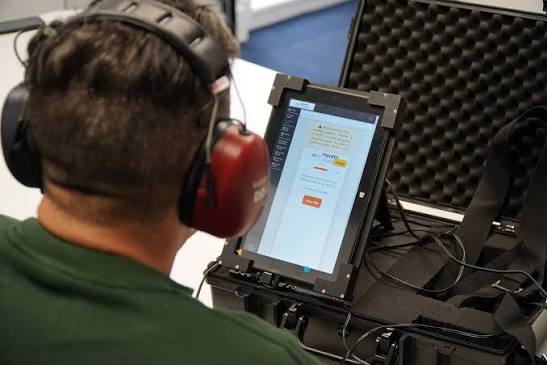
A trained person may conduct routine audiometric tests using an agreed protocol. They need to understand equipment operation, otoscopic limitations within their scope, test instructions, hygiene, contraindications, ambient-noise requirements, quality checks and when to stop or refer. They must not offer a diagnosis outside their competence.
HSE guidance expects a competent adviser to be in charge of the programme. This is likely to be a suitably qualified occupational-health professional who understands occupational audiology, workplace noise risk, ethics and referral. The adviser should assure test quality, interpret audiograms, arrange referral, advise individuals and provide appropriate feedback to the employer.
The person assessing workplace noise requires occupational-hygiene competence: selecting representative tasks, using suitable instruments, calculating exposure and understanding uncertainty and controls. An equipment supplier or test technician may contribute information, but the employer should verify that advice covers the decision being made.
Employers should specify competence when procuring a service. Ask who provides clinical governance; what professional registration, training and experience apply; how calibration and test-room conditions are controlled; how abnormal results are reviewed; and what reporting and referral routes are included. A low-cost test without interpretation or workplace feedback may provide little preventive value.
Design a Reliable Testing Programme

Before testing starts, agree the programme with workers and safety representatives. Explain its purpose, procedure, confidentiality, possible outcomes and referral arrangements. Workers should understand that surveillance protects health and assesses controls; it is not a pass-or-fail examination for employment.
Establish a baseline at an appropriate point, followed by testing at intervals advised by the competent person and HSE guidance. Testing schedules may need adjustment for findings or individual risk. Consistency improves comparison, but rigid timing should not delay investigation of reported symptoms such as tinnitus, muffled hearing or difficulty understanding speech.
The test environment matters. Background sound can mask test tones and make thresholds appear worse. The room should meet the applicable acoustic requirements for the procedure. Audiometers require appropriate calibration and routine functional checks. Earphones, response controls and accessories must be maintained and hygienically managed.
Pre-test information should cover relevant noise exposure, hearing protection, symptoms, medical history and factors that may affect the result. The tester should use standardised instructions that the worker understands. Language, literacy, anxiety and familiarity with the procedure can affect reliability; clear explanation is a control measure in its own right.
Quality assurance should identify inconsistent responses, equipment faults and testing outside permitted conditions. Repeat testing may be appropriate, but repeating until a preferred result appears is not. The competent adviser should decide whether further assessment or medical referral is needed.
Interpret Results Without Losing Context

Audiograms are commonly categorised to support consistent action, but categories do not replace professional judgement. The competent adviser should consider change from baseline, pattern across frequencies, asymmetry, symptoms, previous results and test reliability. A result suggesting rapid change or another medical condition may require prompt referral.
Individual clinical information must remain confidential. The worker should receive an understandable explanation of the outcome and any recommended action. The employer normally needs fitness or restriction advice, confirmation of necessary referral and information relevant to risk control—not an unrestricted copy of the medical record.
The competent adviser should provide anonymised group analysis where numbers and confidentiality allow. Look for changes concentrated in a department, task, shift or length-of-service group. Small populations require cautious interpretation because a percentage can appear dramatic and individuals may be identifiable. Trends should generate questions, not unsupported conclusions.
A warning result should trigger review of exposure and controls. Check whether the assessment represents actual work, whether plant condition has changed, whether workers enter other noisy areas and whether peaks or overtime were missed. Examine engineering actions, maintenance, hearing-protection selection, compatibility, fitting and use. Medical follow-up and workplace investigation should proceed together.
Keep Noise Control at the Centre

The Control of Noise at Work Regulations prioritise prevention and reduction. Procure quieter machinery, remove unnecessary impact, isolate vibration, fit silencers or enclosures, separate people from sources and maintain equipment. At or above the upper action value, employers need a planned programme of technical and organisational measures.
Hearing protection supports these controls where residual risk remains. Selection should provide adequate—not excessive—protection and account for frequency, fit, comfort, communication and compatibility with other personal protective equipment. Real-world attenuation may be lower than laboratory values. Training, supervision, replacement and, where useful, fit testing help establish whether protection works in practice.
Health-surveillance findings must not be used to decide that susceptible people alone need protection. Noise controls should protect the exposed workforce. Individual adjustments may be necessary in addition, guided by competent advice and equality considerations.
Governance, Records and Worker Trust

Assign a programme owner who can connect occupational health, safety, engineering, human resources and line management. Maintain a secure health record for each worker as required, separate from general employment information. Retain exposure and control records so changes in hearing can be considered against work history.
Document consent and information arrangements, test dates, equipment quality checks, clinical review, referrals and employer actions. Define escalation times for urgent results and a method for confirming that recommendations were completed. Data protection principles require a lawful basis, purpose limitation, security and appropriate access; they do not prevent the employer receiving necessary risk-control advice.
Trust affects participation and test quality. Explain who sees which information and why. Avoid punitive responses to adverse findings. Consult workers about appointment timing, noise-control problems and protection. A workforce that fears redeployment or dismissal may withhold symptoms, undermining prevention.
Audit the Whole System
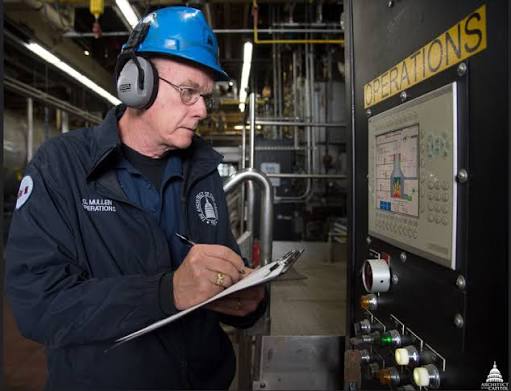
An audit should go beyond the number tested. Check coverage against the exposed population, missed appointments, timeliness of review, calibration, test environment, referrals and closure of workplace actions. Compare surveillance trends with noise measurements, control failures and maintenance information.
Review the programme after process change, new equipment, altered shifts, an adverse trend or a concern about service quality. HSE advises reviewing noise-risk assessments when circumstances change and checking periodically even where no obvious change has occurred. Surveillance design should evolve with that assessment.
Sysco Environmental can support the occupational-hygiene elements through representative noise assessment, exposure interpretation and control advice. We recommend agreeing clear interfaces with the occupational-health provider so measurement, audiometry and engineering action answer the same preventive question.
Competent audiometry protects hearing only when results lead to timely decisions. Clear governance, reliable testing, confidential interpretation and control at source turn a collection of audiograms into an effective health-surveillance programme.