

Is Your Heat-Stress Plan Ready for Real Working Conditions?
A heat plan must do more than advise people to drink water. Sysco Environmental explains how UK organisations can establish triggers, responsibilities, controls and emergency arrangements for indoor and outdoor work.

In Brief
- UK law has no universal maximum workplace temperature, but employers must assess and control foreseeable heat risk.
- Heat stress reflects environment, workload, clothing, duration and individual factors.
- The plan needs defined ownership, action triggers, competent assessment and authority to pause work.
- Engineering measures, acclimatisation, recovery, hydration, communication and emergency response must operate as one system.
- Records and post-event review should demonstrate whether the plan works in practice.
Why a Written Plan Matters
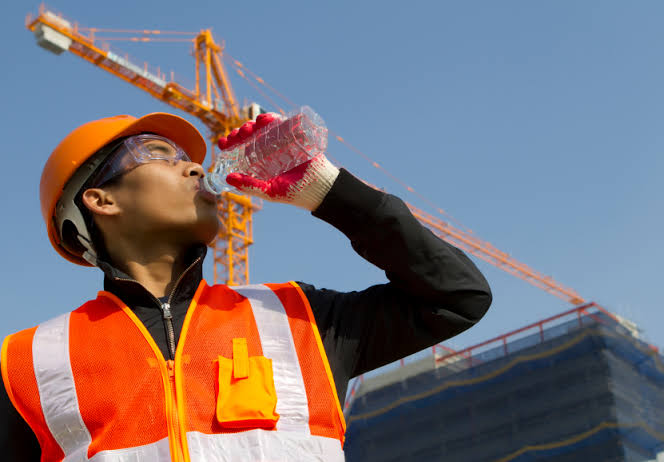
Hot work is not limited to summer. Foundries, bakeries, laundries, boiler rooms, roof spaces, kitchens and enclosed process areas may create risk throughout the year. Outdoor teams face solar radiation, humidity and changing weather, while maintenance shutdowns can combine heavy work, restricted spaces and protective clothing. Climate trends increase the importance of planning, but existing industrial heat sources already require control.
A plan converts a general risk assessment into decisions people can apply during a shift. It identifies who monitors conditions, which tasks require additional precautions, what triggers action, who can stop work and how an ill worker will be rescued. Without these details, organisations tend to react after symptoms appear.
Under the Health and Safety at Work etc. Act 1974 and Management of Health and Safety at Work Regulations 1999, employers must assess risk and organise effective preventive measures. The Workplace Regulations require a reasonable indoor temperature, but there is no statutory maximum applying to every workplace. HSE therefore expects risk-based control. PPE, manual handling, work equipment, confined-space and construction duties may also apply.
Establish Scope, Ownership and Competence

Name a senior owner and a competent person responsible for the technical assessment. Define supervisors’ authority, occupational-health input, first-aid responsibilities and arrangements for contractors, agency workers and lone workers. Procurement, maintenance and production should be included because plant reliability, staffing and work scheduling affect exposure.
List heat-relevant areas and tasks, including abnormal operations, cleaning, breakdowns and emergency work. Identify seasonal and permanent hazards. Record workers or groups who may need additional consideration without making assumptions about capacity. Pregnancy, some health conditions and medicines can affect response; confidential occupational-health advice should guide adjustments.
Specify the period in which the plan is active and the conditions that activate enhanced controls. Calendar dates alone are unreliable. Indoor processes may remain hot during cold weather, and a sudden warm period can affect people before they acclimatise.
Assess the Combined Heat Load

Air temperature alone is insufficient. HSE identifies air and radiant temperature, air movement, humidity, clothing insulation and work rate as relevant. Duration and recovery determine accumulated strain. Observe actual tasks and include walking, climbing, lifting, tool resistance, PPE, access and time required to leave or decontaminate.
Begin with a structured qualitative assessment such as HSE’s heat-stress checklist. Complex work may require measurement and interpretation by a competent occupational hygienist. Wet Bulb Globe Temperature can support decisions, but only when workload, clothing and measurement limitations are addressed. A phone weather reading or single wall thermometer cannot represent every worker’s exposure.
Map heat sources and groups at risk. Establish a baseline under representative production, then plan how changing weather, ventilation failure, increased throughput or different PPE will be recognised. Define uncertainty: when reliable data are unavailable, use a precautionary control level until assessment improves.
Set Action Triggers Before the Shift

A useful trigger table links observable or measured conditions to actions. Increasing levels might initiate additional monitoring, shorter exposure blocks, cooler recovery, reduced work rate, rescheduling and ultimately suspension. Triggers must be site-specific; copying a temperature from another organisation ignores workload, humidity and clothing.
State who checks forecasts and process conditions, where measurements are taken, how often and how results reach supervisors. Confirm readings at the workplace rather than relying solely on regional weather. Define what happens if instruments fail or conditions change between scheduled checks.
Empower supervisors and workers to stop or modify work when controls cannot be maintained or symptoms occur. Production pressure must not override a trigger. Record the decision and conditions so the plan can be improved rather than blaming the person who intervened.
Control Heat Using the Hierarchy

Eliminate unnecessary hot work or carry it out remotely. Substitute lower-temperature processes where possible. Engineering controls include insulation, radiant shielding, enclosure, extraction of hot air, local cooling, improved ventilation, mechanisation and cooled control cabins. Maintain these measures and provide simple checks for operators; a failed fan can turn a controlled task into a high-risk one.
Schedule demanding activity for cooler periods and reduce work rate or duration. Provide a genuinely cool recovery area close enough to be usable. Calculate recovery from the time the worker reaches it, not when the tool is put down. Rotation helps only if the alternative task has lower heat load and cumulative exposure is controlled.
PPE can restrict sweat evaporation and increase effort. Select the least burdensome equipment that still protects against the primary hazard. Cooling garments may assist, but their duration, weight, hygiene, recharge and compatibility must be evaluated. Never encourage loosening required PPE inside a hazardous area.
Provide accessible potable water and regular opportunities to drink. Hydration is important but cannot neutralise excessive heat. Avoid simplistic instructions based solely on thirst or urine colour and obtain medical advice where a worker has fluid restrictions. Welfare provision should include hygienic storage and convenient toilets so workers are not discouraged from drinking.
Build Acclimatisation and Recovery into Staffing

People adapt to repeated heat exposure, but adaptation is incomplete at first and can decline after absence. Use progressive exposure for new starters and people returning after holiday, illness or cooler duties. Adjust workload and supervision over several days based on the task, conditions and individual response. Do not use acclimatisation as a substitute for reasonably practicable controls.
Staffing plans should allow this progression and cover breaks without transferring excessive exposure to colleagues. Contractors arriving for a shutdown may be skilled yet unacclimatised to that site’s conditions. Include their status during induction and work planning.
Train, Communicate and Observe
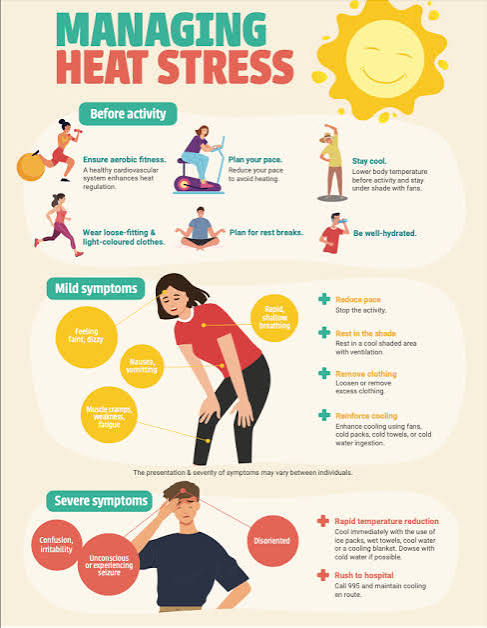
Training should cover the sources of heat, local triggers, controls, symptoms, reporting and emergency action. Workers need to recognise headache, dizziness, nausea, cramps, weakness, heavy sweating, clumsiness and poor judgement. Behavioural change or confusion may be noticed by a colleague first, making buddy observation valuable for high-risk work.
Supervisors need practical instruction, not merely awareness slides. They should be able to interpret the trigger system, adjust work, check welfare and escalate symptoms. Communicate in languages and formats the workforce understands. Displaying a poster does not replace supervision or consultation.
Brief teams at the start of affected shifts and when conditions change. Invite reports of hot spots, failed controls and symptoms. Review near misses, unexpected errors, PPE removal and productivity deterioration as possible signs of thermal strain.
Prepare for a Medical Emergency

The plan should distinguish early symptoms from signs requiring urgent response while directing first aiders to their training. Stop exposure, move the person to a safe cooler place, remove unnecessary outer clothing when contamination controls permit and begin cooling.
Confusion, collapse, seizure, altered consciousness or severe loss of coordination can indicate a life-threatening condition. Call 999 and cool the person rapidly while awaiting help. Do not leave them alone or delay for a perfect measurement. Plan access for emergency services, rescue from restricted locations, management of contaminated clothing and communication where mobile reception is poor.
Run exercises before peak conditions. Verify that cooling supplies are available, routes remain open and people know who calls for help. After every suspected heat illness, investigate the system: exposure, PPE, staffing, recovery, acclimatisation and supervision.
Verify and Improve the Programme

Keep assessment data, trigger records, control checks, training, occupational-health actions and incident reviews. Track leading indicators such as ventilation faults, missed recovery, monitoring coverage and overdue actions. Review after process or PPE changes, unusual weather, symptoms or evidence that assumptions are wrong.
Sysco Environmental can provide heat-stress assessment, workplace monitoring and practical advice tailored to UK operations. A defensible plan is neither a seasonal memo nor a hydration campaign. It is a living management system that predicts risk, acts early and protects people when conditions depart from plan.
Contractor and Change Management
Contract arrangements should state who supplies monitoring, drinking water, welfare, supervision and emergency equipment. Exchange information before work begins and confirm that contractor procedures match site triggers. Simultaneous operations may create unexpected heat through isolated ventilation, temporary enclosures or additional PPE.
Apply formal change management when production rate, material, ventilation, clothing, shift length or work location changes. A small operational alteration can invalidate earlier measurements. Record the proposed change, screen its thermal consequences and obtain competent reassessment where uncertainty remains. Temporary arrangements deserve the same scrutiny as permanent plant.
At the end of each hot period, bring workers and supervisors together to examine what occurred. Compare forecasts with workplace measurements, planned with actual recovery, and expected with reported symptoms. Convert lessons into revised trigger tables, maintenance priorities and training before the next exposure period begins.