

Is Hearing Protection Hiding a Bigger Noise Problem?
Workplace noise can cause permanent hearing damage and interfere with communication and warning signals. UK employers must assess exposure and reduce risk through technical and organisational controls, using hearing protection for the residual risk.

In Brief
- The Control of Noise at Work Regulations 2005 set lower and upper exposure action values of 80 dB(A) and 85 dB(A), measured as daily or weekly personal exposure.
- The exposure limit value is 87 dB(A), taking account of hearing protection, and must not be exceeded.
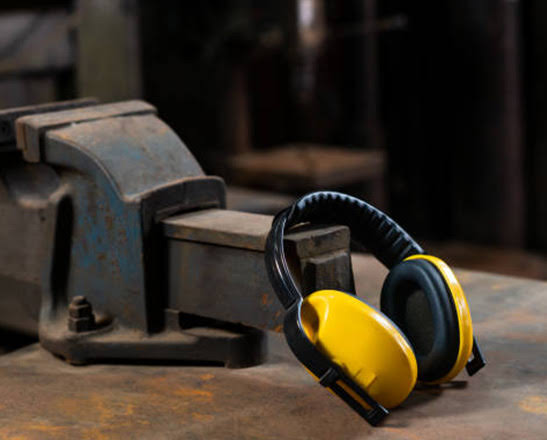
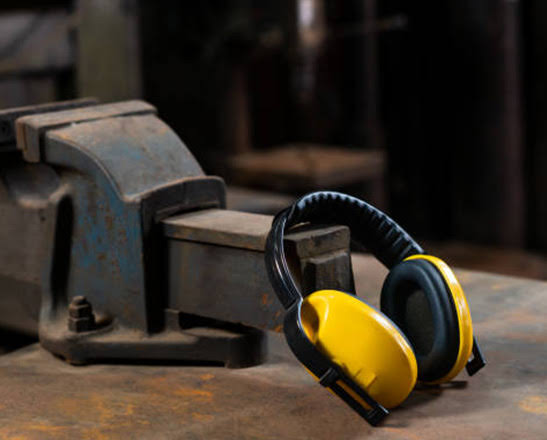
- Hearing protection does not remove noise. Employers should first reduce exposure through quieter equipment, engineering measures, separation, maintenance and work planning.
Noise is easy to normalise. A process may have sounded the same for years, yet workers can still accumulate irreversible hearing damage. Noise may also mask alarms and instructions, increase fatigue and make errors more likely.
At Sysco Environmental, we treat noise as an exposure pathway that must be understood across the working day. A reading beside a machine can help characterise the source, but the employer’s decisions depend on who is exposed, for how long, during which tasks and under what operating conditions.
Know When the Regulations Require Action The The Control of Noise at Work Regulations 2005 apply in Great Britain. Employers must assess risks, reduce harmful exposure, provide suitable hearing protection where needed, observe exposure limits, provide information and training, and arrange health surveillance where workers remain at risk.
The principal values are:
| Regulatory value | Daily or weekly exposure | Peak sound pressure |
|---|---|---|
| Lower exposure action value | 80 dB(A) | 135 dB(C) |
| Upper exposure action value | 85 dB(A) | 137 dB(C) |
| Exposure limit value | 87 dB(A) | 140 dB(C) |
The exposure limit value accounts for the protection provided by hearing protectors. The action values do not. Exposure should not be managed simply by aiming marginally below a numerical threshold; the assessment must determine and control the actual risk.
Northern Ireland applies the Control of Noise at Work Regulations (Northern Ireland) 2006, with the same principal 80 dB(A) and 85 dB(A) action values.
Assess Personal Exposure, Not Noise in Isolation
A suitable assessment identifies noisy tasks and estimates or measures the exposure of affected workers. It should consider routine production, cleaning, maintenance, breakdowns, mobile equipment, impact noise and unusual high-output periods.
Useful evidence may include:
- manufacturers’ noise information;
- task duration and work patterns;
- sound-level measurements around sources;
- personal noise dosimetry for variable or mobile work;
- worker and safety-representative observations; and
- existing audiometric or health-surveillance findings.
Measurements should be planned and interpreted by someone competent to understand the instruments, exposure calculations and uncertainty. Monitoring that produces numbers without informing a control decision adds little value.
Reduce Noise Through Design and Purchasing Noise control is usually most effective when considered before machinery is bought or a process is changed. Procurement specifications can require suppliers to provide relevant emission data and demonstrate quieter options.
Consider whether the noisy process can be removed, automated or replaced. A quieter method, tool, blade, nozzle, drive or material can prevent exposure from being designed into the workplace. Layout decisions can also separate noisy work from occupied areas and reduce the number of people affected.
Management of change should trigger a noise review. Faster production, harder materials, higher pressure, altered guarding or relocated machinery can change exposure even when the basic process appears unchanged.
Apply Engineering Controls at the Source and Path Where elimination or substitution is not reasonably practicable, control the source and the path between it and the worker. Depending on the process, measures may include:
- damping vibrating panels and impact surfaces;
- fitting silencers or quieter compressed-air nozzles;
- enclosing noisy equipment or providing acoustic screens;
- isolating vibration from supporting structures;
- increasing distance or relocating operator positions;
- using remote controls or automated handling; and
- maintaining bearings, guards, lubrication and cutting components.
An enclosure is only useful when it remains closed and does not create overheating, access or maintenance problems. Screens need appropriate dimensions and placement. Controls should therefore be verified under representative production conditions.
Use Organisation to Support Technical Control Restricting access, scheduling noisy work and reducing time near a source can lower exposure. These measures may be useful while engineering improvements are implemented or where residual exposure remains.
Job rotation should be used cautiously. It redistributes exposure and may increase the number of workers at risk. A better objective is to reduce the noise generated or prevent it reaching occupied positions.
Where exposure reaches the upper action value, identify hearing-protection zones and ensure hearing protection is worn. Boundaries and signs should correspond to the actual risk and remain understandable when equipment or work patterns change.
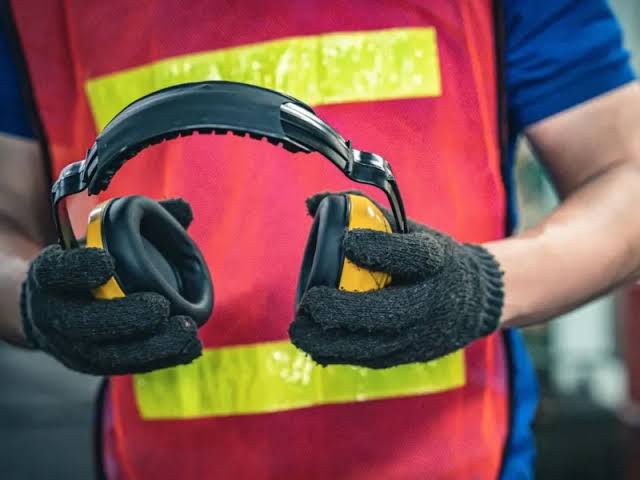
Select Hearing Protection for the Work Hearing protection should reduce risk without unnecessarily isolating the wearer. Excessive attenuation can make communication and warning signals harder to hear. Selection should account for frequency characteristics, level and duration of noise, compatibility with other PPE, comfort, hygiene and the worker’s ability to fit the device correctly.
Provide workers with a suitable choice where possible and demonstrate correct fitting. Supervisors should check that protection is available, maintained and worn throughout exposure. Removing a protector briefly in a high-noise area can materially reduce its effective protection.
Use Health Surveillance to Test the Programme Health surveillance is required where workers are regularly exposed above the upper action value or are otherwise at risk, including individuals who may be particularly sensitive. It should be managed by competent occupational-health professionals and linked back to the risk assessment.
Results may indicate that controls, protector selection, training or programme membership require review. Health surveillance is not a substitute for exposure control, and hearing loss should not be accepted as evidence that the programme is merely detecting harm successfully.
Turn Measurements into an Improvement Plan
Sysco Environmental can help employers map noise sources, characterise personal exposure and prioritise control measures. A useful assessment identifies the people and tasks driving exposure, explains uncertainty and sets out what should be changed and how effectiveness will be checked.
The strongest noise strategy is not the one with the most ear defenders. It is the one that steadily reduces noise at source, limits residual exposure and uses evidence to confirm that worker hearing remains protected.