

What Really Makes a Confined Space Entry Safe?
Confined-space safety in Great Britain begins by avoiding entry wherever reasonably practicable. When entry cannot be avoided, employers need a task-specific assessment, effective controls, competent people and rescue arrangements that work under the conditions likely to be encountered.
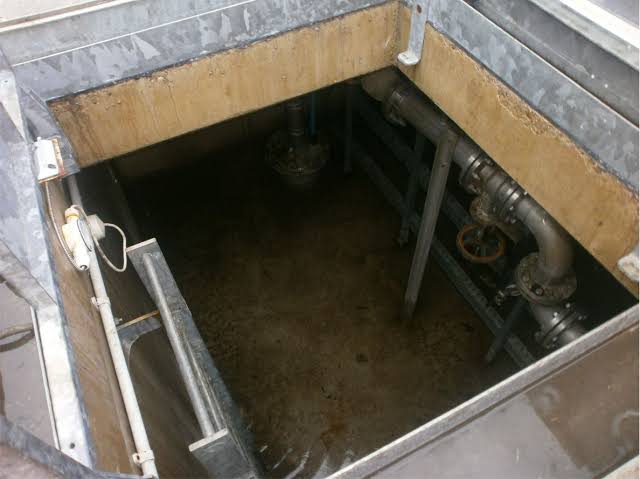
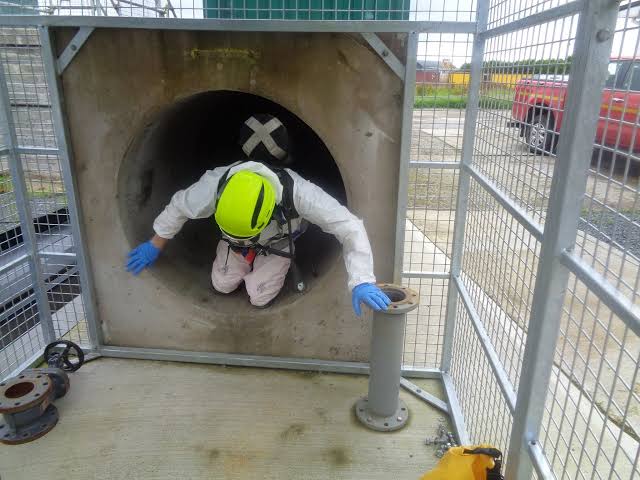
In Brief - A confined space is not defined by size alone. It must be enclosed or largely enclosed and present a reasonably foreseeable specified risk such as fire, explosion, loss of consciousness, asphyxiation or drowning.
- Regulation 4 of the Confined Spaces Regulations 1997 requires employers to avoid entry where reasonably practicable. Unavoidable entry must follow a safe system of work.
- Atmospheric testing is important where a hazardous atmosphere may exist, but it does not replace isolation, ventilation, supervision, communication or emergency planning.
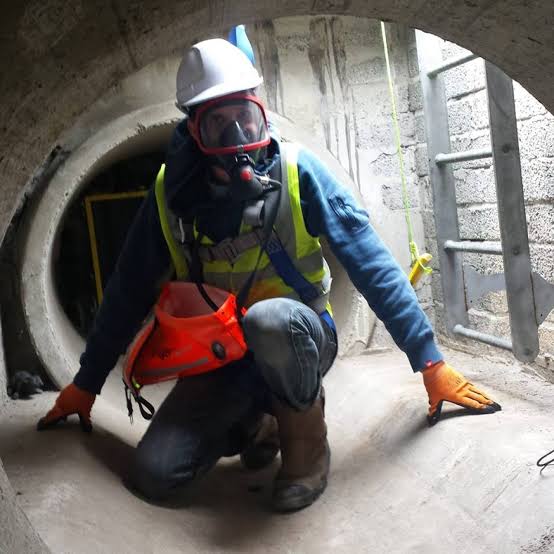
At Sysco Environmental, we recommend starting with the activity and foreseeable conditions rather than with a list of space types. The decisive question is not simply whether a worker can fit inside. It is whether the enclosure could combine with a specified risk to cause serious injury.
What Counts as a Confined Space in Great Britain?
The Confined Spaces Regulations 1997 define a confined space through two linked features. It is a place that is enclosed or largely enclosed, and it presents a reasonably foreseeable specified risk.
Those specified risks concern serious injury arising from:
- fire or explosion;
- loss of consciousness caused by increased body temperature;
- loss of consciousness or asphyxiation caused by gas, fume, vapour or lack of oxygen;
- drowning caused by an increase in the level of liquid; or
- asphyxiation caused by a free-flowing solid or an inability to reach a respirable environment after entrapment by that material.
This differs from the American source article’s distinction between a “confined space” and a “permit-required confined space”. That OSHA terminology does not define the legal test in Great Britain. A permit-to-work may form an important part of a British safe system, but the existence of a permit does not itself make the work safe.
Northern Ireland has a parallel framework under the Confined Spaces Regulations (Northern Ireland) 1999. HSENI has approved HSE’s L101 Approved Code of Practice for use with the Northern Ireland Regulations.
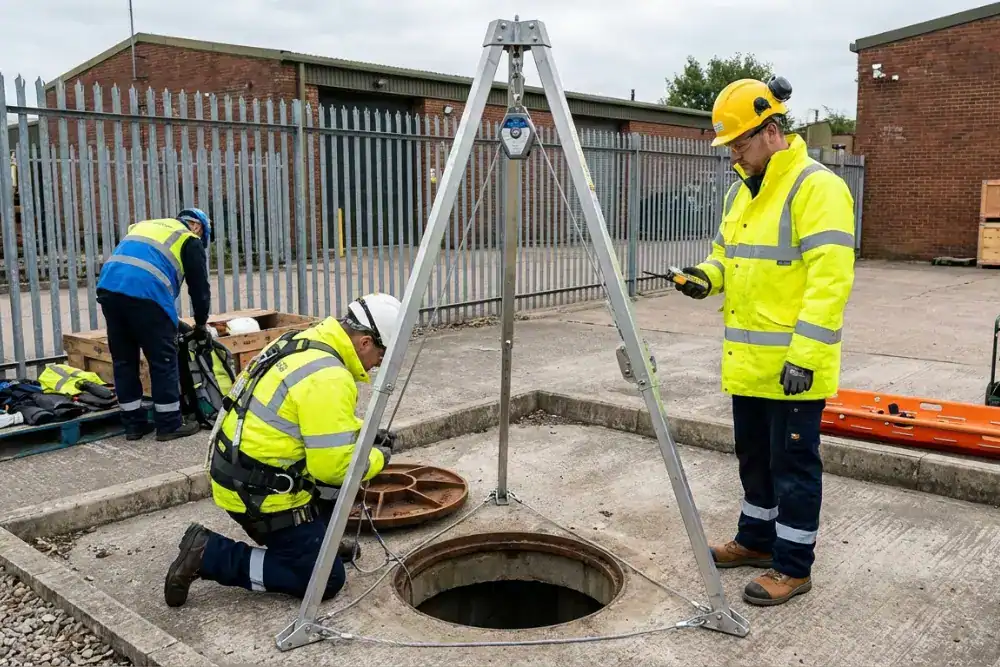
Avoid Entry Before Designing Controls Regulation 4 establishes a clear priority: no person should enter a confined space to carry out work for any purpose unless it is not reasonably practicable to achieve that purpose without entry.
This means considering alternatives before building an entry procedure. Depending on the task, employers might use remote cameras, externally operated cleaning equipment, sampling points, fixed instruments, remote tools or design changes that allow inspection and maintenance from outside.
Avoidance removes the entrant from the confined-space hazard and often removes the need for complex rescue arrangements. The decision should be recorded, particularly when entry is retained because alternative methods are not reasonably practicable.
Assess the Space, Task and Foreseeable Change
Where entry cannot be avoided, the assessment must be suitable for the actual space and work. Generic forms can prompt useful questions, but they cannot account for every process connection, residue, weather condition or task-generated contaminant.
A suitable assessment should consider:
- the previous and current contents of the space;
- residues, scale, sludge or biological activity;
- connected pipework, drains, conveyors and process equipment;
- mechanical, electrical, hydraulic, pneumatic and thermal energy;
- possible ingress of liquid, gas or free-flowing solids;
- oxygen depletion or enrichment;
- toxic, flammable or asphyxiant gases, vapours, fumes and dusts;
- contaminants generated by cleaning, coating, welding or other work;
- access dimensions, internal layout, falls and restricted movement;
- heat, physical effort, noise, lighting and communication;
- the number, competence and fitness of entrants; and
- how an injured or unconscious person could be recovered.
Conditions may change after entry. Rusting, fermentation, disturbance of deposits, product movement, welding gases or a failure of isolation can alter the atmosphere. The monitoring strategy and safe system should therefore reflect both initial conditions and credible deterioration during the job.
Build the Safe System of Work
The assessment should lead to a written, task-specific safe system. Responsibilities must be unambiguous: who authorises entry, who checks isolations, who tests the atmosphere, who maintains communication, who stops the work and who initiates rescue.
Isolation
Potential sources of harmful energy or material should be positively isolated. Closing a control valve or pressing a stop button may be insufficient where inadvertent operation, leakage or stored energy remains credible. The method should reflect the plant and risk, with locks, blanks, disconnection or other secure arrangements used where required.
Cleaning, purging and ventilation
The space may need to be emptied, cleaned, purged and ventilated before entry. Ventilation should use clean air and must not create another hazard. Oxygen must never be used to “sweeten” the atmosphere because enrichment can greatly increase fire and explosion risk.
Atmospheric testing and monitoring
Testing should answer defined questions: is the atmosphere safe to enter, could it vary across the space, and might the work create new contaminants? Instruments must be suitable for the substances and ranges involved, correctly maintained and checked, and used by a competent person.
Testing may need to cover different levels and remote sections because gases can stratify or collect. Where conditions can change, continuous or repeated monitoring may be necessary. An acceptable reading at the entrance does not establish that every part of the space will remain safe.
Access, supervision and communication Entry and exit points must be suitable for the people, equipment and rescue method. Communication between entrants and those outside should remain dependable throughout the work. The level of supervision should reflect the risk and the competence of the team.
Personal protective and respiratory protective equipment
Personal protective equipment (PPE) and respiratory protective equipment (RPE) should address residual risk after more reliable controls have been applied. Where breathing apparatus is necessary, it must provide an appropriate independent air supply and form part of a system covering selection, examination, maintenance, training and rescue implications.
Use the Permit as a Final Check
HSE guidance describes a permit-to-work as a formal check that the necessary elements of the safe system are in place. A permit can define the job, people, duration, isolations, atmospheric criteria, equipment, communication and emergency arrangements.
The permit should be treated as an authorisation control, not a substitute for judgement. If conditions change, an alarm activates, communication fails or an isolation becomes uncertain, work should stop and the space should be reassessed. Extending or copying a permit without checking the current conditions defeats its purpose.
Plan Rescue Before Entry Regulation 5 requires suitable and sufficient emergency arrangements before anyone enters or works in a confined space. The plan should address the foreseeable emergencies identified by the assessment, including incidents not caused by a specified risk, such as a fall or medical incapacity.
HSE is explicit that reliance on the public emergency services alone is insufficient. The employer must provide arrangements capable of raising the alarm and beginning an appropriate response without exposing would-be rescuers to uncontrolled risk.
The detail will vary, but it may include trained rescuers, retrieval equipment, breathing apparatus, resuscitation and first-aid equipment, casualty handling, emergency isolation, communications and access for the emergency services. The arrangements should be rehearsed under representative conditions and reviewed when people, plant, access or hazards change.
From Paper Controls to Defensible Evidence A confined-space file can contain a detailed assessment and still fail in practice. The decisive controls are those that remain effective at the point of entry: verified isolation, representative atmospheric information, competent supervision, clear communication and a rescue method matched to the space.
Sysco Environmental can support employers in characterising atmospheric and occupational hygiene risks, selecting a proportionate monitoring strategy and interpreting the results within the wider safe system of work. Monitoring is most useful when it resolves a defined uncertainty and leads to a clear decision.
The objective is not to issue a permit. It is to demonstrate that entry was necessary, foreseeable risks were controlled and everyone involved knew what would happen if conditions departed from the plan.