

When Communication Fails, Confined Space Risks Escalate Fast
Confined-space work depends on timely, unambiguous information. A safe system must connect the client, contractors, entry controller, people entering, attendants, atmospheric tester and rescue team before entry and throughout changing conditions.
In Brief
- Communication is a control measure, not an administrative extra. It must carry accurate information about hazards, isolations, atmospheric conditions, authorisation and emergency actions.
- A permit-to-work provides a formal communication checkpoint, but it cannot compensate for unclear responsibilities or changing conditions.
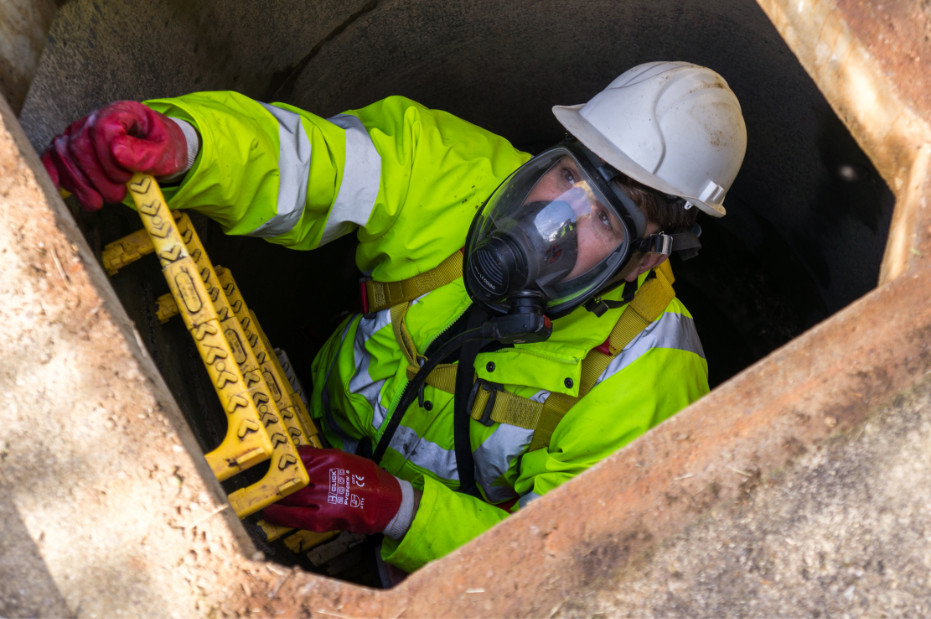
- Communication methods must remain reliable in the actual space, including noise, distance, protective equipment, loss of sight and foreseeable equipment failure.
Confined-space incidents rarely result from one missing document. More often, several people hold different fragments of the operational picture. Operations may know what the vessel contained, maintenance may understand the task, a contractor may bring the equipment, and an occupational hygienist may assess the atmosphere. Unless those pieces are brought together, each person can make a locally reasonable decision based on an incomplete understanding.
At Sysco Environmental, we treat communication as part of exposure control. Measurements only protect people when the result reaches the right decision-maker, its limitations are understood and the response to a changing result has already been agreed.
Begin with the British Definition and Control Priorities
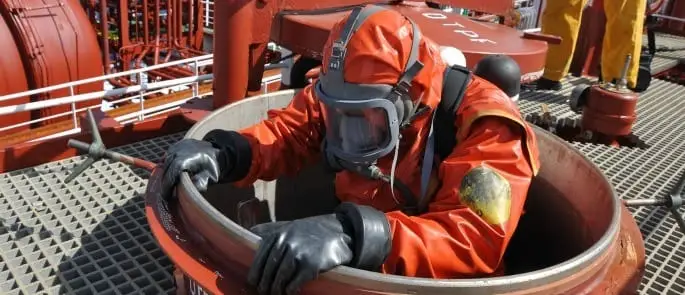
The Confined Spaces Regulations 1997 apply in Great Britain where a place is enclosed or largely enclosed and presents a reasonably foreseeable specified risk. These risks concern fire or explosion, loss of consciousness, asphyxiation, drowning or entrapment by free-flowing solids.
The first duty is to avoid entry so far as is reasonably practicable. If entry cannot be avoided, the work must follow a safe system. Suitable and sufficient rescue arrangements must be prepared before anybody enters or works in the space.
This framework differs from the American permit-required classifications used in the source article. British practice may use a permit-to-work, but the legal question is not whether a space carries an administrative label. It is whether the confined-space definition is met and whether the risks have been avoided or controlled.
Northern Ireland has a parallel regime under the Confined Spaces Regulations (Northern Ireland) 1999. HSENI has approved HSE’s L101 Approved Code of Practice for use with that framework.
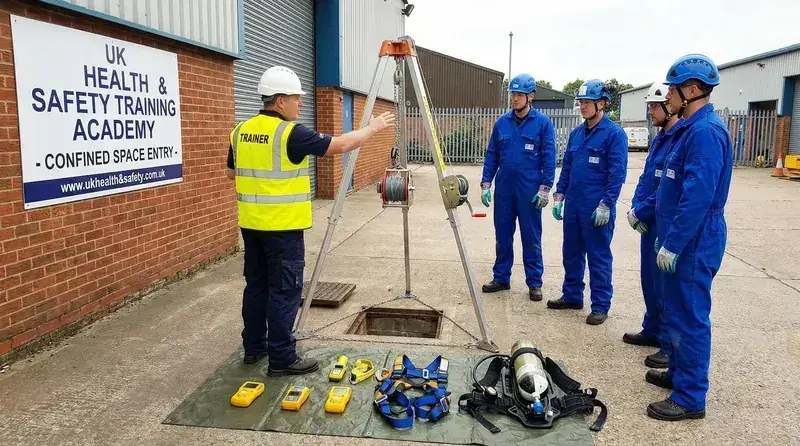
Build One Shared Operating Picture Before entry, the team should be able to describe the same space, job and boundaries. That shared picture should cover:
- the identity and precise location of the space;
- previous and current contents, residues and connected systems;
- the task, tools, substances and energy introduced by the work;
- isolations and how their integrity will be confirmed;
- atmospheric hazards and the purpose of each test;
- entry conditions and limits for stopping work;
- people authorised to perform each role;
- communication equipment, terminology and check frequency;
- simultaneous operations inside and outside the space; and
- rescue activation and recovery arrangements.
Diagrams, photographs, plant identification numbers and marked isolation plans can reduce ambiguity. Avoid informal descriptions such as “the second tank” where similar equipment exists. The entry document should correspond to the physical plant and the labels that workers will see.
Define Responsibilities Without Importing Job Titles Blindly
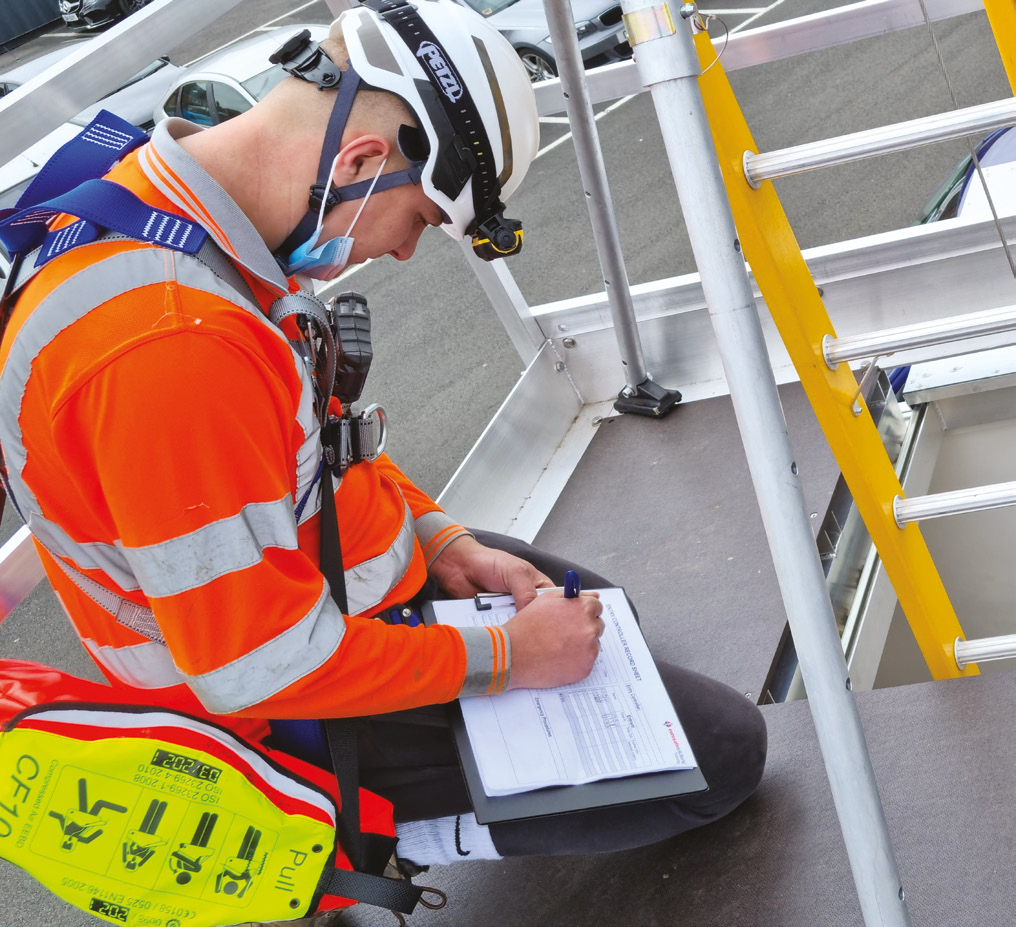
Organisations use different titles for confined-space roles. What matters is that the necessary functions are assigned to competent people and understood by everyone involved.
The person authorising entry This person confirms that the assessment and safe system apply to the intended work, required precautions are in place and the rescue capability is available. Their authority to refuse, suspend and close the entry should be explicit.
People entering the space Entrants need to understand the hazards, controls, communication method, alarm signals and evacuation criteria. They should know how to report a change and must be able to leave promptly when directed or when a prohibited condition arises.
The person maintaining watch or communication Where the safe system requires someone outside, their attention must remain on the entrants and conditions affecting them. Additional duties should not interfere with monitoring, raising the alarm or initiating the planned response.
The atmospheric tester The tester must understand the instrument and sampling method, not simply record displayed numbers. They should communicate what was tested, where, when, under which ventilation and process conditions, and what the result does—and does not—establish.
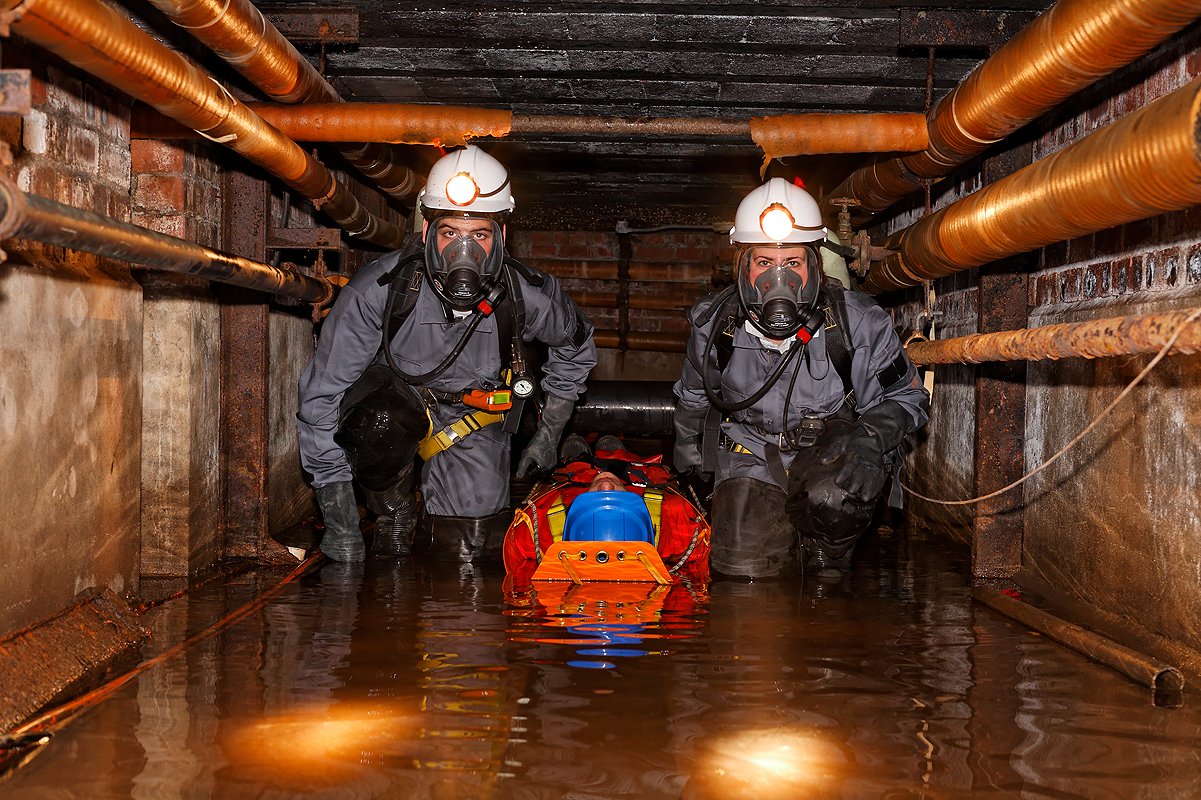
The rescue team Rescuers need current information about access, atmosphere, isolations, casualty location and changes arising from the incident. The entry team must know exactly how to summon them and what actions to take while they mobilise.
One competent person may perform more than one function where the assessment supports it. Combining roles should never create conflicting demands or remove a safeguard essential to the safe system.
Coordinate Clients, Contractors and Simultaneous Work
Each employer retains duties towards its workers, while cooperation and coordination are necessary to prevent one activity creating risk for another. Before work begins, parties should exchange relevant information about plant history, substances, isolations, site rules, competence, monitoring, adjacent activities and emergency arrangements.
Interface risks deserve particular attention. A valve operated by production, a cleaning chemical introduced by another contractor or hot work near a shared ventilation route can change the entrant’s conditions. The plan should identify who controls these interfaces and how proposed changes are authorised and communicated.
A contractor’s generic method statement is not evidence that the host’s space has been understood. Equally, a host should not assume that an experienced contractor automatically knows site-specific hazards that have not been disclosed.
Use the Permit as a Communication Gate
An effective issue process includes a face-to-face or otherwise interactive briefing. Workers should have the opportunity to question unclear controls and demonstrate understanding. Reading a list aloud is not the same as confirming that the team can apply it.
The permit should be suspended or cancelled when the job finishes, the shift changes, conditions depart from the stated limits or the work changes materially. Revalidation requires a positive check, not an assumption that the previous conditions continue.
Communicate Atmospheric Information Properly
- instrument identity and status checks;
- gases or contaminants measured and relevant ranges;
- sampling locations and levels within the space;
- whether testing occurred remotely before entry;
- ventilation and plant status during the test;
- time of measurement;
- results, alarm settings and acceptance criteria; and
- need for continuous or repeated monitoring.
The order of testing and instrument limitations should be understood by the competent tester. Some contaminants require substance-specific sampling rather than a standard multigas instrument. A safe oxygen and flammability reading does not demonstrate the absence of every toxic substance.
Continuous monitors need a defined response. Workers must know which alarm has activated, whether immediate evacuation is required and where the safe assembly point is. Alarm set-points should not be altered informally to prevent interruptions.
Choose Communication That Works in the Space
Select and test the method under representative conditions. Options may include hard-wired communication, suitable radios, visual signals, lifeline signals or direct observation. Where a simple signal system is used, its meaning must be fixed, limited and rehearsed.
Plan for failure. Loss of communication should normally trigger evacuation unless the risk assessment establishes another safe response. Spare equipment, batteries and a secondary method may be needed for higher-risk or extended entries.
Manage Shift Handover and Changing Conditions
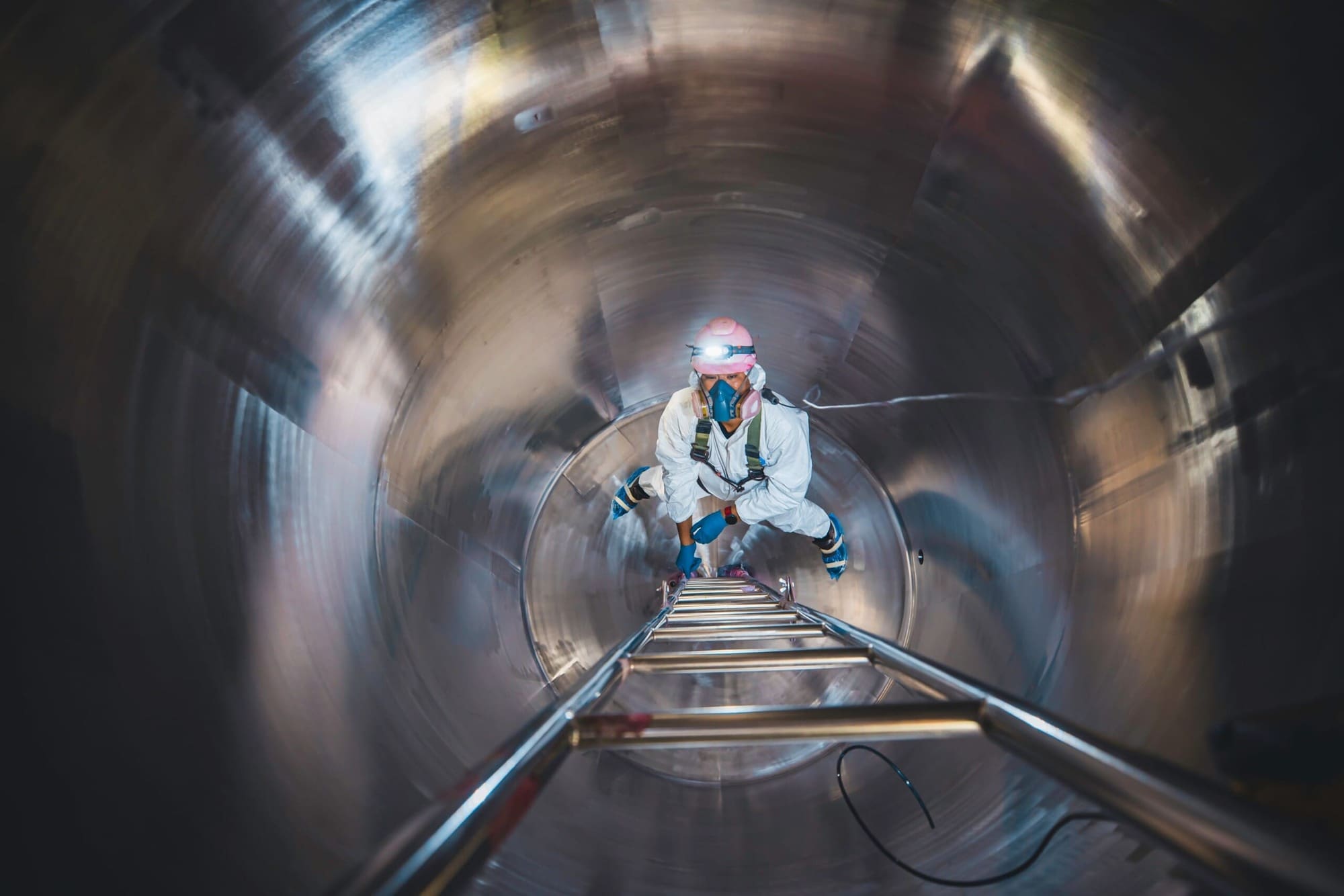
Turnovers create a predictable loss of information. The incoming authoriser, attendant or supervisor should receive a structured handover covering entry status, people inside, isolations, tests, alarms, deviations, incomplete work and rescue availability.
New workers should not enter under an existing permit until they have been briefed and authorised. If the job has moved to a different part of the space, introduced a new substance or altered ventilation, the assessment and monitoring plan may need revision.
Stop-work expectations should be positive and blame-free. Workers are more likely to report weak signals—odour, dizziness, heat, unexpected residue or a changing reading—when supervisors respond by investigating rather than treating every interruption as poor performance.
Make Rescue Communication Immediate and Specific
- exact location and access route;
- number and status of entrants;
- suspected cause and atmospheric information;
- isolations and plant state;
- rescue already initiated; and
- hazards facing responders.
Assign someone to meet external emergency services and provide current documentation. Information at the gate is of little use if the responders cannot locate the space or understand the remaining hazards.
Verify Communication as a Control
Sysco Environmental can support atmospheric risk characterisation, monitoring strategy and interpretation. Our contribution should integrate with the client’s safe system, roles and rescue plan so that measured evidence results in a clear operational decision.
Confined-space communication succeeds when every person knows the current conditions, the limits of their authority and the action required when the plan no longer matches reality.