

Will Your Emergency Eyewash Work When Seconds Matter?
Emergency showers and eyewash equipment can limit harm after chemical exposure only if they are suitable, accessible and ready. Sysco Environmental explains how UK employers should specify, inspect, test and integrate washing facilities into COSHH arrangements.
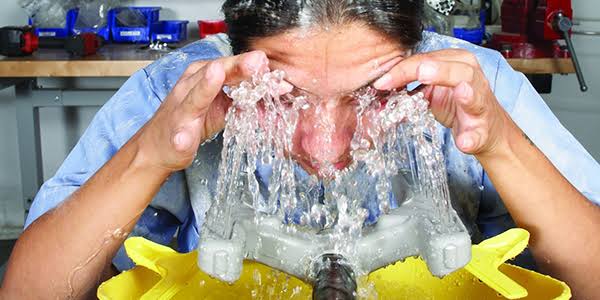
In Brief
- Emergency washing provision should follow a task-specific Control of Substances Hazardous to Health Regulations 2002 (COSHH) assessment, supplier information and credible exposure scenarios.
- Equipment must be immediately accessible, provide appropriate flushing, remain unobstructed and be usable by an injured person.
- Testing frequency should come from applicable standards, manufacturer instructions, water-hygiene assessment and site risk; do not present a US ANSI rule as British law.
- Eyewash and showers reduce consequences after exposure. Elimination, substitution, enclosure and splash control remain the priority.
Installed Does Not Mean Ready
An emergency shower can remain untouched for years and still be expected to work immediately. During that time, valves seize, outlets scale, water stagnates, access becomes storage and drainage arrangements are forgotten. A green sign offers no protection if the unit cannot deliver suitable water.
Eyewash bottles can also create false confidence. Their volume and one-way operation may be useful where mains water is unavailable, but they may not provide the sustained, hands-free irrigation required for a foreseeable corrosive splash. The COSHH assessment must decide what is suitable.
The original US article treated weekly activation and annual testing under ANSI/ISEA Z358.1 as the central answer. British employers should not import that standard as UK law. They need to establish the legal duty, relevant British or European standards, manufacturer instructions and the conditions at their premises.
Start With the Exposure Scenario
List substances capable of damaging eyes or skin and the tasks that could release them. Include decanting, sampling, connecting hoses, cleaning, maintenance, spill response and clearing blocked lines. Consider pressure, temperature, quantity, concentration and reaction products.
Use current safety data sheets, particularly first-aid and exposure-control sections, but do not treat them as the assessment. Supplier advice is general and may not account for the amount handled, distance to equipment, PPE or site layout.
Identify who could be exposed, including cleaners, laboratory staff, engineers, drivers, agency workers and contractors. Consider whether someone may be alone, have impaired vision, be wearing contaminated clothing or be unable to operate a control after injury.
Map credible splash directions and contamination extent. An eye-only risk may need different provision from whole-body exposure. Where corrosive liquid can soak clothing, rapid drenching and safe removal arrangements may be necessary.
Understand the UK Framework
COSHH requires employers to assess risks, prevent exposure where reasonably practicable and otherwise control it adequately. It also requires arrangements for accidents, incidents and emergencies in specified circumstances, including information and suitable response.
The Management of Health and Safety at Work Regulations 1999 require risk assessment and emergency arrangements. The Health and Safety (First-Aid) Regulations 1981 require adequate and appropriate first-aid equipment, facilities and people based on need.
HSE sector guidance supports emergency washing where corrosive or harmful splashes are foreseeable. HSE advice for disinfectants says emergency washing facilities such as showers or eyewash stations should be available and that provided showers or eye sprays should be frequently flushed, with legionella risk considered.
Standards in the BS EN 15154 series address types of emergency safety shower. Standards provide technical benchmarks but are not automatically legislation. Confirm the current part and edition applicable to the installation, and obtain competent advice where the specification is complex.
Control the Hazard Before Planning the Wash
Emergency washing is mitigation, not prevention. Eliminate unnecessary corrosive products or substitute a less hazardous concentration or method. Use closed transfer, automated dosing, dry-break couplings, guards, screens and containment to prevent release.
Reduce the quantity open at one time and design filling points below eye level where practicable. Maintain hoses, seals and valves. Local exhaust ventilation may be required where mist or vapour also creates inhalation exposure.
Personal protective equipment (PPE) manages residual splash risk. Select goggles, face protection, gloves and clothing for the chemical and task, ensuring compatibility. A face shield may not fully enclose the eyes and may require suitable goggles beneath it.
Do not let emergency provision justify weaker source controls. Its role is to reduce injury when prevention fails.
Choose the Right Type of Equipment
Plumbed eyewash units can provide sustained irrigation and hands-free operation when correctly designed and maintained. Non-plumbed units may suit locations without water but depend on fluid capacity, shelf life, inspection and replacement. Sealed bottles may supplement provision or support mobile work, but limitations must be explicit.
Body showers need adequate flow and coverage for the credible contamination. Combination units may assist where eyes and body can be affected together. Handheld hoses can support decontamination but may not be a suitable sole arrangement if an injured worker cannot hold them.
Water quality, temperature and delivery pressure affect usability. Water that is painfully cold or excessively hot can discourage adequate flushing or cause harm. High-pressure flow can injure eyes. Specify equipment using applicable guidance and the chemical risk rather than copying an erroneous temperature range from an overseas article.
Where water reacts dangerously with a substance, obtain specialist chemical and medical advice. Alternative decontamination products should not replace water merely on marketing claims; verify evidence, compatibility and emergency-service expectations.
Put Equipment Where It Can Be Reached
Emergency equipment should be close enough for immediate use, with a simple, unobstructed route. Assess actual travel time while simulating impaired vision, pain and contaminated clothing. Stairs, doors, security controls and traffic routes can make a short measured distance unsuitable.
Place the unit on the same working level where practicable and ensure the route does not pass through the release. Protect access from vehicles and stored materials without hiding the equipment. Lighting and signs should make it easy to find.
The operating control should be obvious and usable quickly. Eyewash should allow hands to hold eyelids open where necessary. Check whether workers wearing gloves can activate it and whether the shower accommodates the complete body and protective clothing.
Remote and mobile tasks may require portable provision plus communication and evacuation arrangements. The assessment must explain how those workers receive immediate irrigation and further medical help.
Resolve Drainage and Secondary Containment
Testing and emergency use can discharge substantial water. Plan drainage rather than allowing fear of a wet floor to prevent activation. Use test equipment, temporary barriers or controlled collection where suitable, but never leave arrangements that delay emergency use.
Contaminated water may create chemical, biological, slip and environmental hazards. Assess containment and disposal without reducing the emergency flow or trapping the casualty. Consult drainage and environmental specialists for significant releases.
Laboratories and process areas without floor drains need a rehearsed solution. Wet-floor controls and clean-up materials should be available after activation, while the immediate priority remains decontamination and medical attention.
Keep electrical equipment and incompatible materials away from predictable discharge. Review building alterations that change drainage, access or freezing risk.
Create an Inspection and Testing Regime
Set frequencies using the COSHH assessment, applicable standard, manufacturer instructions, water-hygiene controls and experience. A routine activation may confirm flow, clear stagnation and reveal blocked outlets or temperature problems. A more detailed periodic examination should check performance against the design specification.
HSE sector guidance sometimes specifies weekly testing for particular applications, such as chemical first-aid provision in swimming-pool operations. That does not make one interval universally prescribed for every British workplace. Record why the chosen regime is suitable.
Checks should cover access, signs, valve operation, outlet condition, flow pattern, water quality indicators, temperature where specified, leaks, drainage and alarm interfaces. Non-plumbed units need fluid level, seal, expiry and cleanliness checks.
Manage legionella and other microbiological risks within the site’s water-safety system. Stagnant warm pipework needs competent assessment; merely running a unit briefly may not control every risk.
Record Defects and Restore Readiness
Use a visible inspection tag or controlled digital record showing the unit, date, checker, result and action. A tick without observed performance has little value. Define pass criteria and retain relevant detailed test evidence.
When a unit fails, protect workers immediately. Stop or alter the hazardous task, provide verified temporary equipment where suitable and prevent reliance on the defective unit. Marking it “out of service” without controlling the exposure is insufficient.
Prioritise repair and retest before return. Review repeated defects for design causes such as low use, poor water quality, freezing, scale or accidental damage. Spare parts and competent maintenance should be planned.
Audit whether scheduled activations occur on every shift pattern and in contractor-controlled areas. Supervisors need authority to suspend work when emergency provision is unavailable.
Train and Practise the Response
Workers must know which substances require immediate irrigation, where equipment is located, how to activate it and how to summon help. Training should address holding eyelids open, removing contact lenses when possible without delaying irrigation, and safe removal of contaminated clothing according to the assessment and medical advice.
Do not prescribe one flushing duration for every chemical without checking current product and clinical guidance. Begin irrigation promptly and follow the safety data sheet, emergency-service and medical instructions. Continue assistance and prevent hypothermia during prolonged drenching.
Practise activation without exposing anyone. Test whether a colleague can guide an injured person, isolate the process, call emergency services and provide the product information. Include lone work and night shifts.
After any use, obtain medical assessment as appropriate, isolate contaminated equipment, replenish supplies and investigate the failure that caused exposure.
Review the Complete Control System
Review provision after substance, concentration, process, layout, staffing or PPE changes. New evidence, incidents, test failures and worker feedback should also trigger reassessment. Confirm that safety data sheets and emergency contacts remain current.
Sysco Environmental can support COSHH assessment and workplace exposure evaluation where splash risk forms part of a wider chemical-control problem. Emergency-equipment engineering and water hygiene may also require specialist input.
Readiness is demonstrated by more than a weekly signature. The employer should be able to show why the equipment suits the credible exposure, how it remains accessible and functional, and what happens from the first splash through irrigation, medical help and prevention of recurrence.