

Would Your Confined Space Rescue Plan Work Today?
A confined-space rescue plan must be designed before work begins, not improvised after an alarm. UK employers need arrangements matched to the space, hazards, casualty and response time—and they cannot rely on the public emergency services alone.
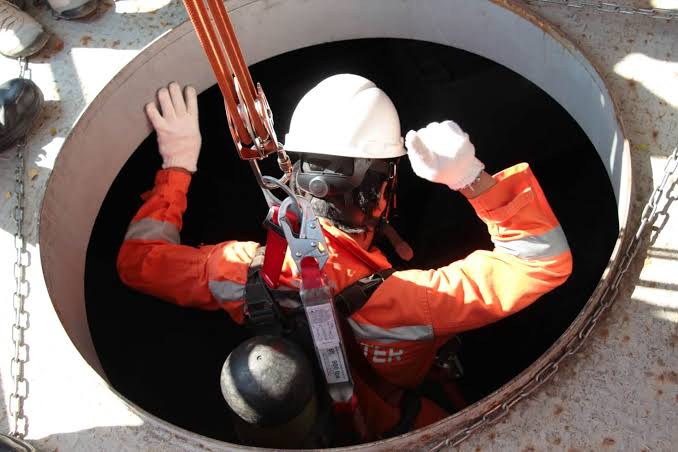
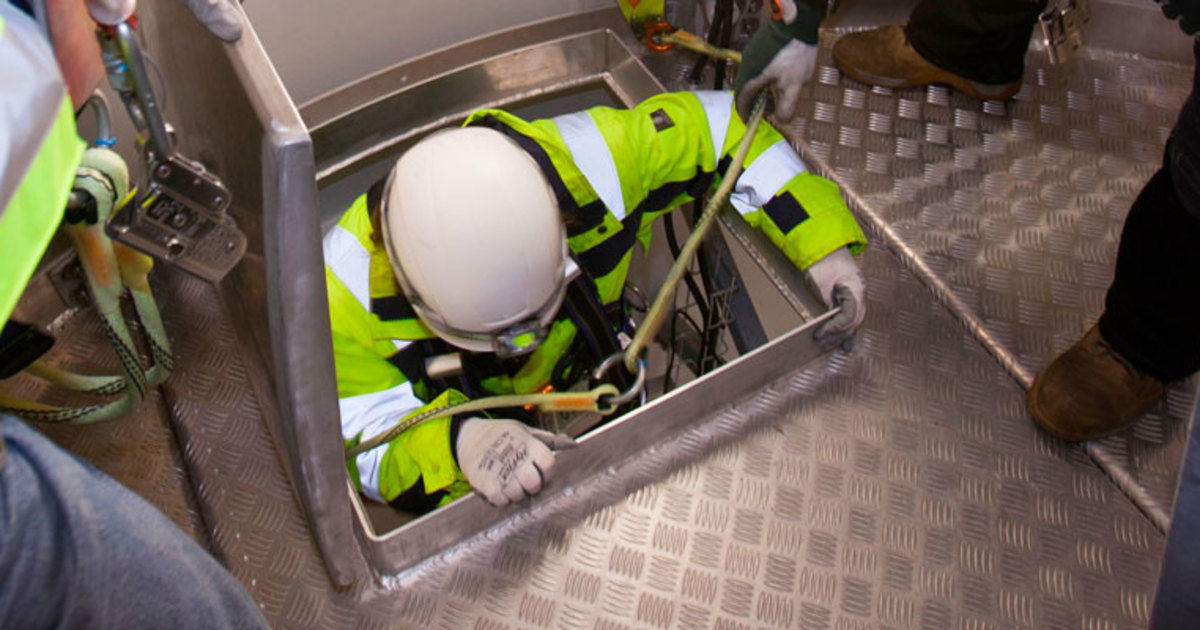
In Brief
- Rescue must not expose attendants or colleagues to uncontrolled danger. Unplanned entry by an unprotected would-be rescuer can turn one casualty into several.
- The rescue method, people, equipment, communications and rehearsal must reflect the actual space and foreseeable emergency.
Rescue is sometimes treated as the final paragraph of a confined-space method statement. In practice, it should influence the entry plan from the beginning. The size of an opening, location of an anchor, route to the casualty and need for breathing apparatus can determine whether recovery is achievable.
At Sysco Environmental, we view rescue readiness as evidence that the entry has been properly understood. If the team cannot explain how it will recognise an emergency, raise the alarm and recover an entrant without uncontrolled exposure, the work is not ready to start.
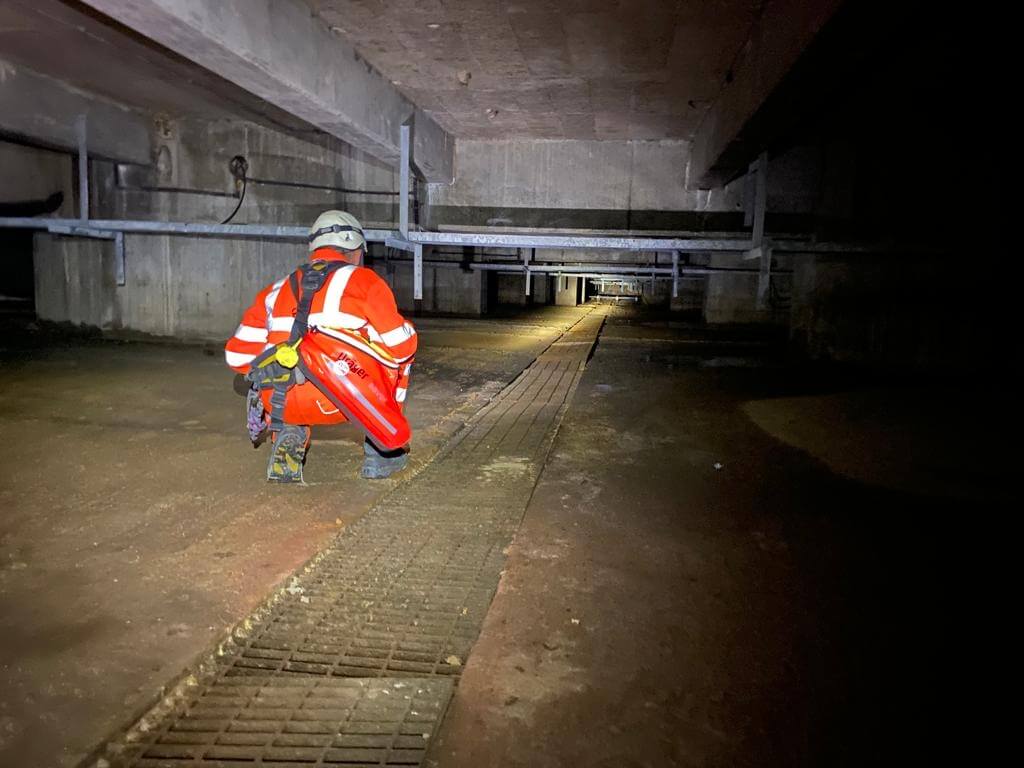
The British Legal Starting Point
The plan must cover more than atmospheric failure. HSE’s L101 Approved Code of Practice explains that foreseeable emergencies include other events requiring recovery, such as a fall or sudden incapacity.
Northern Ireland applies the Confined Spaces Regulations (Northern Ireland) 1999. HSENI has approved HSE’s current L101 for use as practical guidance under that parallel framework.
Do Not Base the Plan on a Generic Rescue Label Terms such as “non-entry rescue” and “entry rescue” are useful, but they do not determine whether a method is workable. A retrieval line may appear to offer a simple non-entry solution yet fail because the casualty must pass around internal obstructions, through a restricted opening or up a vertical route.
The assessment should examine:
- the space’s dimensions, orientation and access points;
- ladders, bends, changes in level and internal obstructions;
- the likely location and condition of a casualty;
- substances, oxygen conditions, engulfment and energy hazards;
- whether the emergency could disable more than one entrant;
- the effect of harnesses, breathing apparatus and other equipment on movement;
- the weight and handling needs of an unconscious casualty; and
- how weather, production or access restrictions could delay the response.
Where recovery from outside is genuinely practicable, it can reduce exposure to rescuers. The system still requires a suitable harness, compatible retrieval equipment, a secure anchor and a clear route. It must not be assumed that pulling on a line will safely recover a casualty.
Define What Starts the Response The plan should identify clear activation criteria. These may include:
- an atmospheric monitor alarm;
- a missed communication or welfare check;
- loss of ventilation, lighting or power;
- failure of an isolation;
- visible distress, collapse or injury;
- fire, leakage, flooding or unexpected material movement; or
- a direction from the entry supervisor or attendant.
Everyone involved should know who raises the alarm, how it is raised and what happens next. Communications must work in the expected noise, distance, construction and electromagnetic environment. A mobile telephone alone may be unreliable or unsuitable.
The attendant’s role should be defined carefully. An attendant who enters impulsively without protection may abandon the alarm and coordination functions while becoming another casualty. Entry should only be undertaken by people who are trained, equipped and authorised for the rescue method.
Select a Rescue Capability, Not Just a Provider Whether the rescue resource is internal or externally contracted, the employer should establish that it can respond to the identified scenarios. Availability on paper is not enough.
The evaluation should confirm:
- who can authorise and mobilise the team;
- where rescuers and equipment will be while entry is taking place;
- how long detection, notification, travel, preparation and access could take;
- whether rescuers can enter the specific space and operate in its atmosphere;
- whether the equipment is compatible with the openings, anchors and casualty route;
- how many rescuers are needed for the task;
- how first aid and resuscitation will begin; and
- how the site team will support the emergency services when they arrive.
Time should be assessed against the likely harm, not against a generic target. An oxygen-deficient or toxic atmosphere can demand an immediate protected response, while a complex casualty recovery may require different resources. Unsupported promises such as “rapid attendance” should be replaced by evidence from mobilisation exercises and representative drills.
Provide Suitable Equipment Equipment selection follows the rescue assessment. Depending on the scenario, arrangements may include:
- full-body harnesses and lifelines;
- tripods, davits, winches or other retrieval systems;
- suitable anchors and edge protection;
- breathing apparatus with an independent air supply;
- atmospheric monitoring equipment;
- intrinsically safe or otherwise suitable communications and lighting;
- stretchers and casualty-packaging equipment;
- first-aid and resuscitation equipment; and
- tools needed for emergency isolation or access.
Every component should be compatible with the complete system. Equipment must be inspected, maintained, stored and available for immediate use. A rescue kit locked elsewhere on the site, missing a connector or unfamiliar to the team is not an effective control.
Rehearse the Plan Under Representative Conditions HSE guidance expects people involved in rescue to be trained for their roles and recommends regular refresher training. L101 identifies rescue techniques and periodic rehearsals as relevant training content, with realistic exercises connected to the actual equipment and procedures.
A useful drill tests the system rather than merely demonstrating equipment. It should examine:
1. detection of the emergency;
2. the clarity and speed of the alarm;
3. mobilisation and site access;
4. equipment set-up and checks;
5. communication and command;
6. access to, treatment and packaging of the casualty;
7. recovery through the expected route; and
8. transfer to first aid and the emergency services.
Record the outcome, including delays, communication failures, equipment conflicts and unsafe actions. Corrective actions should have owners and completion dates. Repeat the exercise where a significant weakness means the original result did not demonstrate a workable response.
Integrate Contractors and the Emergency Services Contractor involvement can create gaps between the host’s arrangements and the entry team’s assumptions. Before work begins, both parties should agree who controls the entry, who provides rescue, how alarms are communicated and which equipment is available.
HSE states that reliance on the public emergency services alone is not sufficient. That does not make liaison with them unnecessary. The site should still be able to call them rapidly, provide accurate information about hazards and access, and support their dynamic assessment on arrival.
Information should be immediately available, including the space location, access route, substances, isolations, atmospheric results, number of entrants and status of the internal response. Someone should be assigned to meet and direct arriving crews.
Verify Readiness Before Every Entry Rescue arrangements can degrade between planning and entry. Team members may be absent, equipment may have been moved, production conditions may have changed, or an access route may be blocked.
The entry authorisation should therefore confirm that the rescue capability remains available and suitable on the day. If a required person, control or equipment item is unavailable, entry should not begin—or should stop until the arrangement is restored.
Sysco Environmental can help employers characterise atmospheric hazards and decide what monitoring evidence is needed before and during entry. That evidence supports the wider rescue assessment; it does not replace competent rescue planning, training or rehearsal.
The strongest emergency plan is one the organisation has tested against reality. Rescue starts before entry—with a method that protects the entrant without creating the next casualty.