

Is Your Construction Site Ready for Dangerous Heat?
Construction combines outdoor weather, heavy work, changing layouts and protective equipment. Sysco Environmental explains how UK clients, principal contractors and employers can plan heat controls into each phase rather than relying on workers to cope.

In Brief

- UK construction heat risk is governed through general health and safety, risk-management, welfare and CDM duties; there is no universal maximum temperature.
- Design, programme and logistics decisions can eliminate or reduce heat exposure before work starts.
- Site assessment must consider solar and radiant heat, humidity, air movement, workload, clothing, duration and access to recovery.
- Contractors need coordinated trigger levels, welfare, acclimatisation, supervision and emergency arrangements.
- Weather forecasts help anticipate risk, but local conditions and worker symptoms must determine action.
Why Construction Heat Needs Its Own Plan
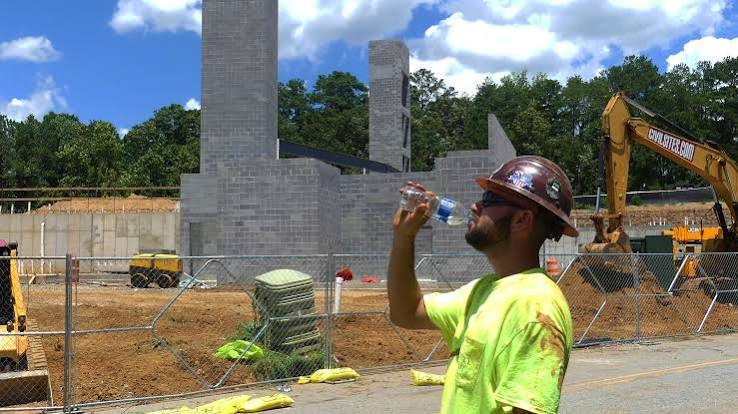
Construction sites change daily. A shaded ground-level task can move onto a reflective roof. Temporary sheeting can restrict air movement. Mechanical excavation may become manual work when access narrows. Workers may wear helmets, high-visibility clothing, gloves, safety footwear, fall protection and respiratory protective equipment while lifting, climbing or using heavy tools.
This combination creates risk even when the regional temperature appears unexceptional. Solar radiation, hot materials, humidity, metabolic work and clothing all add to the body’s heat load. Fatigue and reduced concentration may also affect vehicle movements, work at height, lifting operations and tool use before a worker develops obvious illness.
Heat should therefore form part of project planning, logistics and daily coordination. A generic summer memo telling workers to drink water is not a construction heat-management system.
Duties Across the Project Team
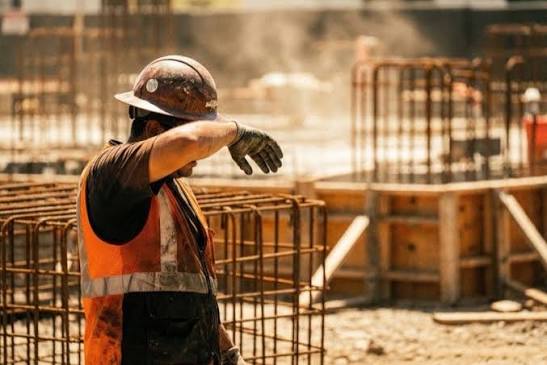
The Health and Safety at Work etc. Act 1974 and Management of Health and Safety at Work Regulations 1999 require employers to assess and control foreseeable risks. The Construction (Design and Management) Regulations 2015 require clients, designers and contractors to plan, manage and monitor health and safety within their influence.
Clients must make suitable arrangements, including sufficient time and resources. Designers must eliminate foreseeable risks so far as reasonably practicable and reduce or control those that remain. Principal contractors plan, manage and monitor the construction phase and coordinate contractors. Each employer retains duties to its workers.
Heat control can therefore begin before mobilisation. A designer may specify prefabrication or access that reduces prolonged manual work in exposed areas. The programme can place demanding roof work in cooler periods. Procurement can provide mechanical handling, temporary ventilation and shaded welfare. Late planning narrows these options.
The Workplace Regulations do not generally govern a construction site in the same way as a fixed workplace, but CDM contains specific welfare requirements. Suitable drinking water, changing arrangements, rest facilities and other welfare must be available. There is no general UK maximum working temperature, so dutyholders must use a suitable and sufficient risk assessment.
Identify High-Risk Tasks and Locations

Map work by phase, location and time. Common high-risk situations include roofing, road laying, demolition, concrete work, confined or enclosed spaces, scaffold work, excavation, plant maintenance and tasks involving flame-resistant, chemical-protective or respiratory equipment. Newly cast concrete, dark roofs and metal decks can create strong radiant loads.
Assess the six factors highlighted by HSE: air temperature, radiant temperature, air movement, humidity, clothing and work rate. Add duration, recovery, worker experience and access. A climb to the workface and travel to a distant rest area belong in the exposure pattern.
Consider groups needing additional protection. New starters, workers returning after absence and people transferred from cooler work may lack acclimatisation. Pregnancy, medical conditions and some medicines may alter tolerance. Use confidential occupational-health advice rather than informal fitness judgements.
Include contractors, delivery drivers, security staff and plant operators. A cooled cab provides protection only while its cooling works and doors remain closed. Lone or remote workers need reliable communication and a rescue plan.
Use Forecasts and Site Evidence Together

Assign responsibility for checking reliable weather forecasts before each shift and during changing conditions. Forecasts support scheduling and early communication, but a regional value may not reflect a roof, excavation, enclosed floor or work beside hot plant.
Use HSE’s heat-stress checklist for initial screening. Where risk is complex or potentially high, competent measurement may be appropriate. Wet Bulb Globe Temperature can combine aspects of humidity, radiant heat and air temperature, but interpretation must account for workload and clothing. It is not a statutory pass/fail number.
Define representative monitoring locations and times. Record cloud, shade, wind, work rate, PPE and site changes. A sensor in the site office cannot govern exposed work hundreds of metres away. Measurements should answer specific questions and be repeated when conditions or work change.
Worker reports are part of the evidence. Headache, nausea, dizziness, cramps, weakness, poor coordination, irritability and unexpected errors require action. An instrument result should never be used to dismiss symptoms.
Create an Escalating Site Trigger System
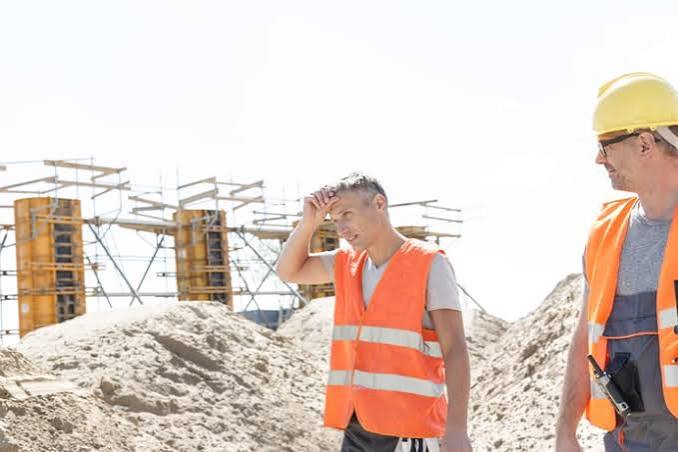
Develop project-specific action levels before hot conditions arrive. The initial level might require briefings, welfare checks and closer monitoring. Higher levels may bring earlier starts, reduced pace, more recovery, additional shade, mechanical aids and restrictions on demanding tasks. A final level should stop or postpone work where risk cannot be controlled.
Link each level to named responsibilities. State who records conditions, who informs subcontractors, who changes the programme and who can stop work. Provide a conservative fallback if information is unavailable or a cooling control fails.
Use one coordinated system across the site, while allowing task-specific controls. Different employers using conflicting triggers or break arrangements create confusion. Discuss the plan in coordination meetings and daily briefings, and make it understandable in the languages used on site.
Apply the Hierarchy During Design and Delivery

Eliminate exposed work through off-site fabrication, remote inspection or alternative sequencing. Substitute lower-temperature processes or less burdensome materials where practicable. Designers should consider permanent and temporary access, lifting points and maintainability so future workers are not forced into unnecessarily strenuous methods.
Engineering controls may include temporary roofs, reflective shade, forced ventilation, insulation, radiant screens, cooled cabs and mechanical handling. Shade the work area where possible, not just the rest area. Secure temporary structures against wind and ensure they do not introduce fire, access or lifting hazards.
Administrative controls include cooler start times, planned work–recovery cycles, shorter exposure blocks and adequate staffing. Rotation works only when the receiving task is materially cooler or lighter. Include walking, doffing and decontamination in the timing. Avoid incentive arrangements that reward skipped breaks or rapid completion at the expense of controls.
Select personal protective equipment for the primary hazards while minimising unnecessary insulation and weight. PPE must remain compatible and correctly worn. Cooling garments may help selected tasks, but require assessment of cooling duration, recharge, hygiene, weight and fall-protection compatibility.
Provide Welfare That Workers Can Use
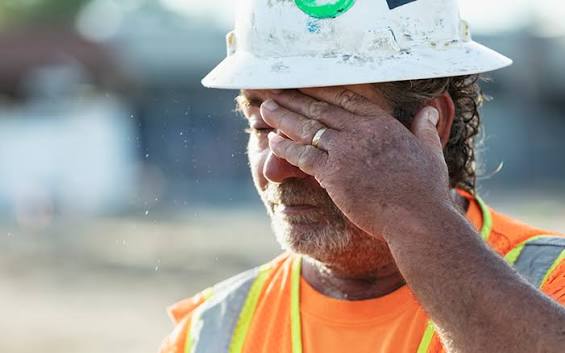
Cool potable water should be free, hygienic and close enough for regular access. Provide cups or personal containers and a method for replenishment. Hydration supports heat control but does not compensate for excessive work. Avoid universal quantities that ignore individual needs; seek occupational-health advice for workers with fluid restrictions.
Recovery areas should be shaded, ventilated or cooled, have seating and be separated from dust and vehicle movement. Welfare capacity must match peak staffing, including subcontractors. A distant cabin reached after a long ladder descent may not provide timely recovery.
Plan changing and storage so wet clothing or PPE can dry or be replaced. Washing facilities matter where removing PPE could transfer hazardous dusts. Toilets must be convenient so workers are not discouraged from drinking.
Acclimatisation and Supervision

Build progressive exposure into induction and staffing for new and returning workers. Increase heat workload over several days according to conditions, task and individual response. A competent plan should also cover workers who arrive during a short shutdown and cannot complete a conventional acclimatisation period; reduce their exposure rather than assuming experience elsewhere is equivalent.
Train supervisors to recognise symptoms, apply triggers and challenge unsafe programme pressure. Workers should understand controls, early reporting and buddy checks. Toolbox talks can refresh information, but competent supervision and working controls matter more than attendance signatures.
Consult workers and safety representatives. They know where temporary screens block airflow, which water points run empty and which tasks exceed planned duration. Provide a straightforward way to report concerns and confirm what was changed.
Emergency and Rescue Arrangements

Plan how an affected person will be reached, moved and cooled from roofs, excavations, towers, confined spaces and remote areas. Identify first aiders, communications, access points and rendezvous information for emergency services. Rescue must not expose others to falls, traffic, contamination or confined-space hazards.
Confusion, collapse, seizure, altered consciousness or severe loss of coordination may indicate a life-threatening condition. Call 999 and begin rapid cooling in accordance with first-aid training. Do not wait for a perfect temperature reading. Never leave the person alone.
Exercise arrangements in realistic locations and confirm that routes remain available as the site changes. Review every suspected case and near miss against work rate, conditions, PPE, welfare, staffing and supervision.
Monitor the Project and Learn
Track forecasts, workplace readings, trigger activations, welfare checks, control failures, symptoms and programme changes. Inspect temporary ventilation and shade. Review the assessment when the structure encloses, work moves level, PPE changes or another contractor alters the environment.
Sysco Environmental can support construction teams with task-based heat-stress assessment and occupational-hygiene monitoring. The value lies in connecting representative evidence to buildable controls and clear site decisions.
Construction heat risk is best managed upstream. When clients, designers and contractors plan exposure out, provide usable welfare and act on changing conditions, workers are not left to absorb the consequences of programme and design decisions.