

Stop guessing what your workforce is breathing. Start proving control.
We measure diesel exhaust exposure in real working environments and provide defensible data, clear reporting and practical recommendations aligned with occupational hygiene best practice.
- UK-wide since 2013
- Independent assessments
- ISO 9001 accredited
- Practical control advice
What this means for you
Evidence you can act on and defend.
Measured exposure evidence
Data suitable for HSE, insurers and audits.
Independent assessment
Occupational hygiene review of real workplace exposure.
Practical control recommendations
Prioritised actions based on risk and operational practicality.
Compliance support
Evidence to support COSHH responsibilities and internal governance.
Speak with a DEEE specialist
0800 433 7914
sales@sysco-env.co.ukMon–Fri · 08:00–18:00 · Personal sampling · LEV review · RPE evaluation
We'll get back to you promptly
What happens next
Most surveys are completed with minimal disruption.
We typically attend site for one working day, sample the people most at risk during normal activities, review your controls and return a clear action plan within agreed reporting timescales.
No unnecessary disruption. No generic paperwork. No unnecessary complexity.
Whether exposure is controlled
A clear yes or no, backed by measurement.
Where the highest risks are
Locations, tasks and roles ranked by exposure.
What actions matter most
A prioritised plan you can budget and schedule.






What you get
Four answers. One clear plan.
You need to know:
- what your workforce is exposed to,
- whether your controls are effective,
- what actions matter most,
- and how to demonstrate control confidently.
That is exactly what we deliver.
Know what your team breathes
We measure real 8-hour exposure on the people most at risk — no guesswork, no assumptions.
Know where you stand legally
We compare your numbers to the 0.05 mg/m³ binding limit and EH40 so you know exactly where you sit.
Know if your controls work
An independent review of your LEV, ventilation and RPE controls — identifying what is effective and what requires improvement.
Get a report you can act on
Clear findings and a prioritised action plan suitable for HSE, insurers and operational management.
Why clients call
If any of this sounds familiar, you’re in the right place.
- 01
An auditor is asking
HSE, your insurer or a client wants evidence — not assurances
We provide measured exposure data and a clear technical report that resolves the issue quickly.
- 02
Your team is worried
Operatives are reporting fumes in workshops, plant rooms or loading bays
We attend site, quantify workforce exposure and provide clear evidence of current risk levels.
- 03
You suspect a problem
You know there's exposure and you need measured exposure data before it becomes a crisis
We quantify exposure, assess it against current limits and provide a prioritised corrective action plan.
Operational resources for DEEE duty holders
Practical tools and reference materials for workplace exposure management.
Operational support for the people running the site — built from the same methodology we use on survey. No sign-up.
Immediate self-assessment
Operational resources
What we answer for you
Three questions, settled.
- Where your people are exposed
- We map your engines, plant rooms and vehicle movements, then sample the air your team actually breathes — not a generic site average.
- Whether your controls are working
- An independent review of your LEV, ventilation and RPE controls — identifying what is effective and what requires improvement.
- What you need to fix first
- A prioritised, costed action list — the smallest set of changes that gets you compliant and measurably safer.
How we work with you
From your first call to your action plan.
- 1
We listen first — your site, your concerns, your deadline.
- 2
We walk the workplace with your team to see exposure as it actually happens.
- 3
We sample the air on the people most at risk, using validated occupational hygiene methods.
- 4
We assess your existing controls honestly — what's working, what isn't.
- 5
You receive a clear technical report suitable for operational teams, compliance review and regulatory scrutiny.
- 6
We hand you a prioritised action plan you can budget, schedule and defend.
Typical survey outputs
What you receive at the end of the engagement.
- Personal exposure monitoring data
- Elemental carbon exposure assessment
- Exposure comparison against EH40 limits
- LEV and ventilation observations
- RPE suitability review
- Exposure risk mapping
- Prioritised corrective actions
- Defensible technical report
Client testimony
“Sysco gave us measured exposure data, plain-English recommendations and a report we could put straight in front of the HSE.”
— Operations manager
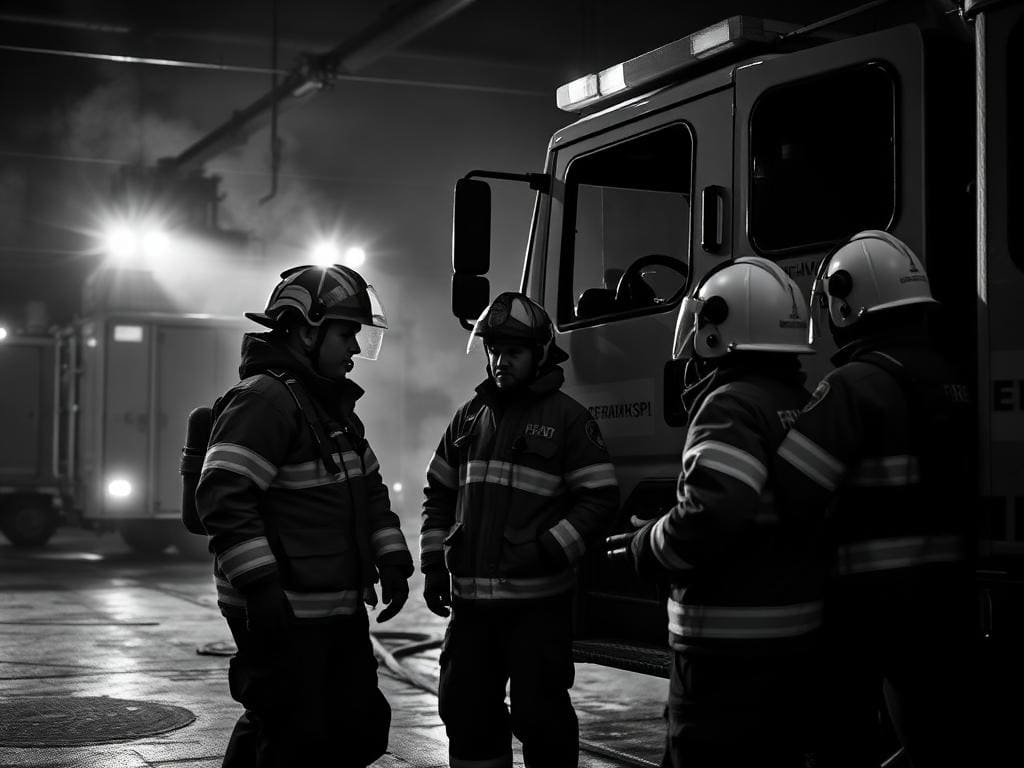
UK fire & rescue service

Typical environments we assess
Wherever diesel runs in or near occupied space.
- Vehicle depots
- Distribution centres
- Underground car parks
- Workshops & maintenance bays
- Rail facilities
- Fire stations
- Plant rooms
- Warehousing operations
- Construction support environments
Background
Diesel engine exhaust emissions, in detail.
What are diesel engine exhaust emissions (DEEE)?
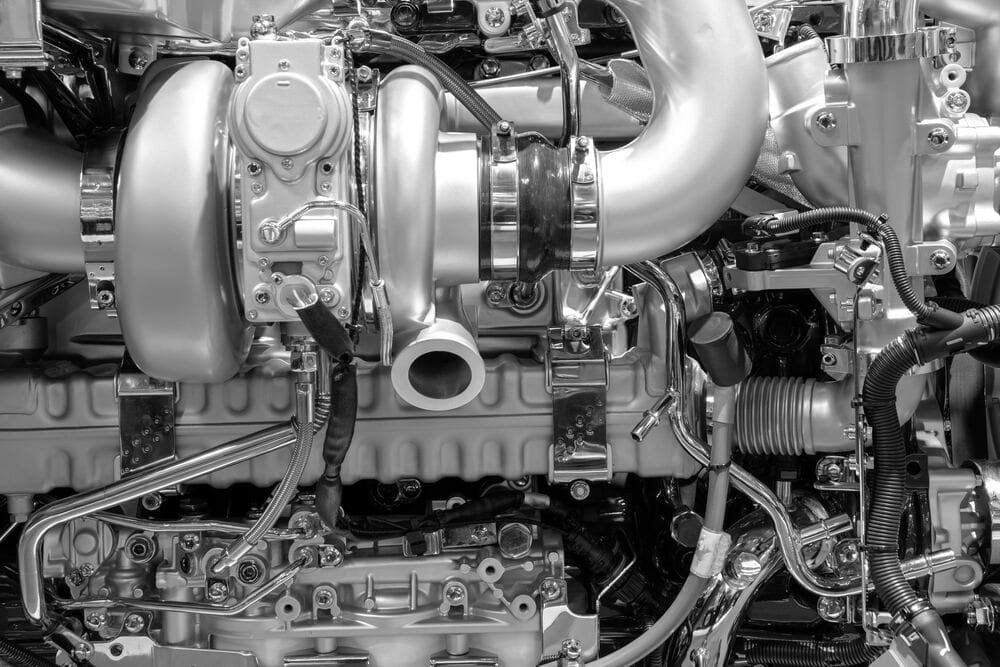
Diesel engine exhaust emissions, commonly abbreviated to DEEE or simply diesel fumes, are the complex mixture of gases, vapours, liquid aerosols and ultrafine particles produced when diesel fuel is burned in an internal combustion engine. The mixture contains nitrogen oxides (NOx), carbon monoxide, carbon dioxide, sulphur dioxide, polycyclic aromatic hydrocarbons (PAHs), aldehydes and a high mass of soot — the elemental and organic carbon particulate fraction often used as the marker substance for occupational diesel exposure monitoring.
Diesel exhaust typically contains many times the soot mass found in petrol exhaust. Many of its components are individually hazardous, and the mixture as a whole has been classified as carcinogenic to humans (Group 1) by the International Agency for Research on Cancer. Diesel fumes are visible at much lower concentrations than petrol exhaust, but the most dangerous fraction — the ultrafine particulate — is invisible and easily inhaled deep into the lung.
Health effects of diesel fume exposure
Short-term exposure to diesel exhaust emissions causes irritation of the eyes, nose, throat and airways, headaches, light-headedness, nausea and an aggravation of existing asthma. These effects are usually reversible but signal that workplace exposure is poorly controlled.
Long-term, repeated exposure is the more serious concern. Sustained inhalation of diesel particulate has been linked to chronic bronchitis, reduced lung function and an increased risk of lung cancer; there is also growing evidence of an association with bladder cancer and cardiovascular disease. Because the disease latency can be decades, robust monitoring and recordkeeping today protects both the workforce and the employer’s long-term liability position.
Who is at risk?
Anyone working in, or close to, an enclosed or semi-enclosed space where diesel engines are running can be exposed. The risk is highest where engines idle for extended periods, where extraction is undersized or absent, and where natural ventilation is restricted. Sectors and roles we regularly assess include:
- Fire and rescue appliance bays
- Emergency generator and sprinkler plant rooms
- Rail depots, sidings and engineering shops
- HGV and bus depots, vehicle workshops
- Mining, quarrying and tunnelling operations
- Multi-storey and underground car parks
- Warehousing using diesel forklifts
- Construction sites with diesel plant in confined areas
- Marine engine rooms and dockside operations
- Agricultural buildings with running diesel machinery
How DEEE monitoring works
A defensible diesel exhaust assessment combines three things: a competent walk-through that maps where engines run, who is nearby, and for how long; quantitative air sampling that captures the actual exposure of named workers over a representative shift; and laboratory analysis that returns a reportable concentration in the units regulators recognise.
Personal sampling
A small, calibrated sampling pump is worn by the worker for a full shift, with a sampling head positioned in the breathing zone. This produces a personal eight-hour time-weighted average (8-hour TWA) — the metric most directly comparable to occupational exposure limits.
Static (area) sampling
Fixed sampling points are used to characterise specific zones — an appliance bay, a generator room, a loading dock — and to test the performance of local exhaust ventilation (LEV) and general dilution ventilation. Static data also helps identify peak emission events that personal sampling can mask.
Elemental carbon (EC) is the standard marker for diesel particulate matter and is measured to internationally validated methods such as NIOSH 5040. Real-time aerosol instruments are also used to map short-term concentration peaks during specific tasks, supporting targeted control measures.
Exposure limits and the legal framework
UK employers have a duty under the Control of Substances Hazardous to Health Regulations 2002 (COSHH) to assess and control exposure to substances hazardous to health, including diesel exhaust. The Health and Safety Executive (HSE) publishes Workplace Exposure Limits in document EH40/2005 (as amended), and many DEEE constituents — nitrogen dioxide and carbon monoxide among them — carry their own WELs.
Since 21 February 2023, diesel engine exhaust emissions have also been listed under the carcinogens and mutagens provisions of COSHH, with a binding occupational exposure limit value of 0.05 mg/m³ measured as elemental carbon (8-hour TWA), reflecting the EU Carcinogens and Mutagens Directive. Underground operations have a transitional limit and a longer compliance window. A documented DEEE assessment is the only practical way to demonstrate compliance with these obligations.
Practical controls — the hierarchy in real workplaces
Effective DEEE control follows the standard hierarchy of risk reduction. Eliminate the source where possible — for example by replacing diesel forklifts with electric equivalents, or by relocating idling away from occupied areas. Substitute lower-emission engines (Stage V, after-treatment fitted) where elimination is not feasible. Engineer controls through tailpipe extraction in fire stations and workshops, well-designed local exhaust ventilation in plant rooms, and adequate make-up air. Administrative controls — idling policies, scheduled testing windows, restricted access — reduce time-weighted exposure. Respiratory protective equipment is the last line of defence and must be face-fit tested.
Each of these controls only works if it is verified. Our reports include explicit, prioritised recommendations that name the control, the location, the responsible role and a sensible target date.
What our DEEE reports cover
Every Sysco Environmental DEEE report is signed off by a competent occupational hygienist and is structured to be useful to a site manager, an HSE inspector, an insurer and a board reader at the same time. It includes:
- A clear summary of the work carried out, sampling strategy and observations on existing controls and PPE.
- Tabulated sampling results with sample location, duration, method and analyst, benchmarked against WELs and the EH40/2005 limit for elemental carbon.
- An assessment of LEV and general ventilation performance, with proportionate improvement recommendations.
- A review of respiratory protective equipment selection, suitability and face-fit status (face-fit testing available as an add-on).
- Annotated photographs and schematics highlighting the issues found and the controls recommended.
- A prioritised action plan with named owners and target dates — not just a list of findings.
- Relevant HSE guidance citations applicable to your specific operations.
Related services
Often assessed alongside diesel exhaust.
Welding fume monitoring
Mn, Cr(VI), Ni and total particulate sampling for fabrication and steelwork.
Explore 02Respirable crystalline silica
RCS exposure measurement for stoneworks, construction and quarrying.
Explore 03LEV testing (TExT)
Statutory thorough examination & test of extraction systems under COSHH reg 9.
Explore 04Hazardous substances (COSHH)
Full COSHH exposure assessments across solvents, dusts, fumes and bio-aerosols.
ExploreCommon questions
DEEE monitoring — FAQs.
Quick answers to the questions we hear most from operations, HSE and procurement teams.
- How long does a DEEE assessment take on site?
- Most single-site surveys are completed in one shift. Multi-shift operations or large generator estates may require two or three visits to capture worst-case exposure periods.
- What is the legal exposure limit for diesel exhaust in the UK?
- Since February 2023, a binding limit of 0.05 mg/m³ (8-hour TWA, measured as elemental carbon) applies under the carcinogens and mutagens provisions of COSHH. Underground operations have a transitional value and a longer compliance window.
- How quickly will I receive my report?
- Draft results are usually issued within 10 working days of the laboratory returning analysis. Urgent turnaround is available where insurer or audit deadlines apply.
- Do you provide control recommendations or just numbers?
- Both. Every report includes a prioritised action plan with proportionate, costed control recommendations — not just measured concentrations. We will also revisit and verify controls once you implement them.
- Can the same survey cover other airborne hazards?
- Yes. Where appropriate we combine DEEE sampling with carbon monoxide, nitrogen dioxide, respirable dust or welding fume monitoring on the same visit.
- Where in the UK do you work?
- Nationwide. Our occupational hygienists travel from regional bases to sites across England, Scotland, Wales and Northern Ireland.
Speak with a DEEE consultant
Tell us your situation. We’ll come back with a plan.
Tell us
- where diesel engines operate,
- who may be exposed,
- what concerns triggered the assessment,
- and your reporting deadline.
We will provide
- a clear scope,
- fixed quotation,
- proposed attendance strategy,
- and expected reporting timeframe.
Send us a brief
Outline the engines, sites and shifts of concern — we’ll reply with a clear scope and fixed quotation.