

Can Contact Lenses Be Worn Safely Around Chemicals?
Contact lenses are vision correction, not personal protective equipment. Sysco Environmental explains how UK employers can assess lens use around chemicals without relying on blanket assumptions, while ensuring suitable eye protection and immediate decontamination.

In Brief
- Contact lenses do not protect the eyes and never replace suitable safety spectacles, goggles or face protection.
- UK employers should assess the chemical, physical form, exposure route, task, eyewear, wearer and emergency arrangements together.
- A blanket ban is not automatically the safest policy; task-specific restrictions may be justified by evidence or medical advice.
- Following a chemical splash, irrigation must begin immediately. Do not delay flushing while trying to remove a lens.
- Prevention through enclosure, controlled transfer and local exhaust ventilation takes priority over reliance on eye protection.
Separate Vision Correction From Protection
Workers may prefer contact lenses because they provide clear peripheral vision, do not mist like ordinary spectacles and fit beneath some goggles or full-face respiratory protective equipment. These practical advantages can lead to two opposite mistakes: treating lenses as protective, or banning them from every chemical area without assessing the work.
A contact lens sits on the eye’s tear film. It has no impact rating, splash seal or certified chemical-protection performance. The employer must provide suitable eye and face protection wherever residual risk requires it, regardless of whether a worker uses contact lenses, prescription spectacles or neither.
The relevant question is therefore not simply “Are contact lenses allowed?” It is: “What could reach the eye, how will exposure be prevented, what protective equipment is suitable, and could lens wear affect response or recovery?” The answer may differ between sealed transfer, laboratory pipetting, powder charging, spray application and emergency maintenance.
Apply the UK Legal Framework
The Control of Substances Hazardous to Health Regulations 2002 (COSHH) require employers to assess hazardous-substance risks and prevent exposure where reasonably practicable. Where prevention is not reasonably practicable, exposure must be adequately controlled. A safety data sheet contributes information, but it does not replace a task-specific COSHH assessment.
The Personal Protective Equipment at Work Regulations 1992, as amended in 2022, require suitable PPE for residual risks and extend relevant duties to limb (b) workers. PPE must take account of working conditions, ergonomics and the wearer’s health, fit correctly and remain compatible when worn together. Employers provide it without charge, maintain it and give information, instruction and training.
The Health and Safety (First-Aid) Regulations 1981 require adequate and appropriate equipment, facilities and people for first aid. The assessment should determine whether emergency eyewash, a drench shower or other arrangements are needed. Product information and medical advice should inform the response for particular chemicals.
Lead and asbestos have their own exposure regimes, while biological agents and physical hazards may add requirements. Northern Ireland operates parallel legislation through HSENI, so employers there should confirm territorial provisions.
Assess the Chemical and the Actual Task
Identify every substance that might contact the eye, including products generated by reactions, cleaning chemicals and residues inside equipment. Review concentration, pH, temperature, physical form and eye-hazard classification. A corrosive liquid, irritant vapour, solvent mist and fine caustic powder present different challenges.
Then map how release could occur. Pouring from an open container can splash as air displaces liquid. Pressurised lines may spray during disconnection. Vigorous reaction, blocked dosing equipment, broken glassware and compressed-air cleaning can create unexpected releases. Consider maintenance, spills and sampling as well as routine use.
Observe the worker’s position and likely direction of travel. Check whether goggles seal around the face, whether spectacle arms or RPE interfere, and whether fogging encourages removal. Contact lenses may change the practical fit relationship, but ordinary prescription spectacles are not protective unless specifically designed and marked for the hazard.
The assessment should consider available evidence about the chemical and lens material without assuming that every substance behaves alike. Soft and rigid lenses differ, and claims that lenses inevitably fuse to the eye or always trap chemicals should not be used as universal rules without evidence. Where uncertainty is material, seek advice from a competent occupational hygienist, occupational-health professional, optometrist, PPE manufacturer or chemical supplier, according to the question.
Decide Whether Restrictions Are Justified

A written policy can permit contact lenses generally while restricting use for defined tasks or areas. A restriction may be appropriate where authoritative product information contraindicates lens use, a substance has unusual properties, emergency lens removal would be particularly difficult, or medical advice identifies an individual concern.
Document the basis, scope and review date. Avoid copying restrictions from an overseas standard without checking British relevance. Equally, do not permit lenses merely because no explicit prohibition appears in legislation. The COSHH and PPE assessments must still demonstrate adequate control.
Consult affected workers. A ban may lead someone to use unsuitable ordinary spectacles, work with poorer vision or conceal lens use. Offer a practical alternative, such as compatible prescription safety eyewear or a suitable full-face device with an approved prescription insert. Decisions should respect equality, privacy and medical confidentiality.
Visitors and contractors need clear information before entering restricted areas. Use signs where they support the policy, but do not rely on signs alone. Induction and supervision should explain the required protection and emergency procedure.
Prevent Eye Exposure at Source
Eliminate the hazardous substance or substitute a less harmful form where reasonably practicable. Purchase diluted or pre-mixed products where this reduces transfer, provided it does not introduce other risk. Automate or enclose dosing and sampling. Use closed couplings, pumps and properly vented dispensing systems instead of uncontrolled pouring.
Local exhaust ventilation can capture vapour, mist or dust near the release point. Design it for the process and prevent airflow directing contamination towards the face. Maintain and test engineering controls, and provide workers with simple performance indicators.
Reduce inventory at the work position, stabilise containers, provide drip trays and segregate incompatible materials. A tidy layout reduces knocks and hurried handling. Safe systems should cover line breaking, decanting, cleaning, maintenance and spill response.
These controls protect the whole workforce and reduce skin and respiratory exposure as well as eye risk. PPE remains necessary for credible residual splash or impact, but should not carry the entire burden.
Select Eye and Face Protection Correctly

Safety spectacles protect against certain projectiles but generally offer limited chemical-splash protection. Goggles enclose the eyes more fully; ventilation design matters because some ventilated types are unsuitable for fine dusts, gases or direct splash. A face shield protects more of the face but does not seal the eyes and should normally supplement rather than replace appropriate primary eye protection.
Select equipment to an applicable standard and marking for the hazard, with competent supplier advice where necessary. Check chemical compatibility, coverage, optical quality, field of view, fogging, comfort and resistance to impact. The complete combination must work with RPE, helmets and hearing protection.
Fit each wearer. Gaps, displaced straps and interference from other equipment can defeat nominal protection. Provide anti-mist solutions or ventilation arrangements suitable for the chemical hazard. Replace scratched, clouded, distorted or damaged equipment and store it away from contamination.
Full-face RPE may provide eye protection where selected and used for the atmosphere, but it still requires a respiratory risk assessment, face-fit testing for tight-fitting models and suitable filters or air supply. Contact lenses do not remove those requirements, and ordinary spectacle arms must not break the face seal.
Plan Immediate Decontamination
Following a chemical splash, begin irrigation immediately using the emergency arrangement specified by the assessment and product information. Do not postpone flushing while attempting to remove contact lenses. Delay can allow a corrosive or irritant substance to cause further injury.
Once irrigation has started, remove a lens as soon as practicable if it does not wash out and removal can be achieved safely. First aiders need training, but should work within their competence and follow current clinical or poison-information advice. Continue irrigation for the appropriate period and obtain urgent medical assessment when indicated.
Position eyewash so an affected person can reach it rapidly without stairs, locked doors or hazardous traffic. Ensure water quality, flow and temperature are appropriate, inspect equipment and keep access clear. Portable bottles may support immediate flushing but may be insufficient for a prolonged wash; the risk assessment should determine provision.
Plan for both eyes being affected and for impaired vision. Workers should know how to raise the alarm, and colleagues should guide the casualty without exposing themselves. Provide emergency services with the product identity and safety information.
Training, Hygiene and Occupational Health
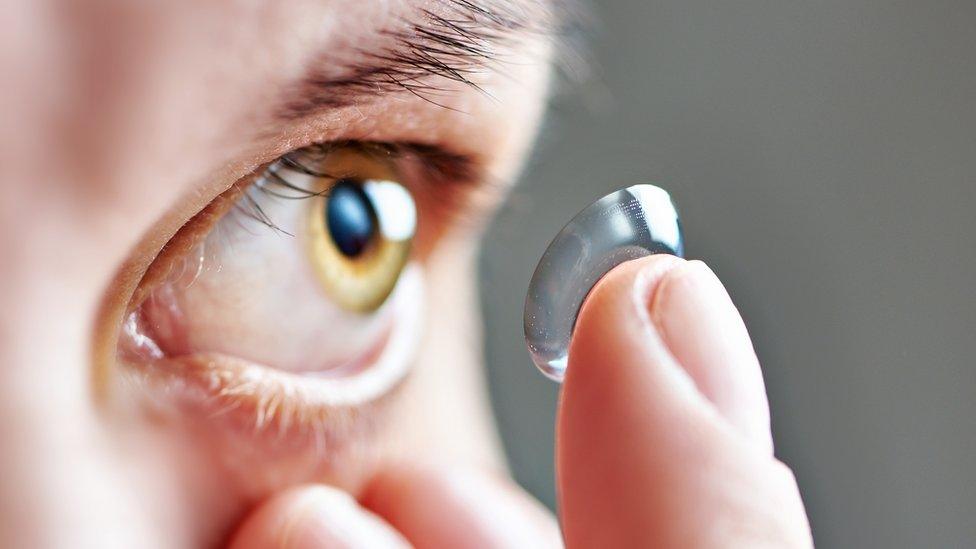
Training should explain that contact lenses are not PPE, which protection is required, where restrictions apply and how to report irritation or equipment defects. Demonstrate correct fitting, cleaning and storage of protective eyewear. Workers should not handle lenses with contaminated hands or remove them in the hazardous area merely because irritation starts.
If redness, pain, watering, blurred vision or persistent discomfort occurs, stop work and move to a clean area. Follow the exposure procedure where contact is suspected and seek medical advice. Continued lens use after irritation should be considered with an optometrist or occupational-health professional.
Supervisors need only the information required to apply controls and respond to emergencies. A proportionate policy may ask workers to tell an appropriate person that they wear lenses in specified high-risk work, while protecting privacy. Avoid collecting medical details without a defined need and lawful process.
Verify the Policy in Practice
Inspect engineering controls, eyewear condition, fit, eyewash access and worker understanding. Review splashes, near misses, irritation reports and occasions when goggles were removed because of misting. These events can reveal design weaknesses more effectively than a signed policy.
Reassess after a new substance, concentration, transfer method, PPE combination or medical recommendation. Verify safety data and manufacturer advice at each review because formulations and guidance can change.
Sysco Environmental can support
COSHH assessment and occupational-hygiene evaluation where airborne or splash pathways are uncertain. The most useful assessment connects substance properties, task observation and control performance rather than treating contact-lens wear as an isolated personal choice.
A sound policy is evidence-led and task-specific. Control the chemical at source, provide suitable eye protection to every exposed worker and ensure irrigation begins without delay. Contact lenses then remain what they are: a form of vision correction within a properly controlled system.