

Laser or Arc Welding: Are Your Controls Fit for the Process?
Laser and conventional welding can both generate serious optical, fume, fire and mechanical hazards, but their control systems are not interchangeable. Sysco Environmental explains how UK employers should assess each process and verify protection.
In Brief
- All welding fume can cause lung cancer, so suitable engineering control is required for indoor welding and respiratory protective equipment may also be needed.
- Laser risk depends on wavelength, power, operating mode, beam path and accessible reflections; invisible radiation can still injure the eye.
- Enclosure and interlocking normally provide stronger laser control than reliance on specialised eyewear.
- Arc welding requires control of fume, ultraviolet and infrared radiation, electricity, hot work, gases and fire.
- Changes to material, coating, shielding gas, laser parameters or enclosure should trigger reassessment.
Different Processes, Different Exposure Pathways
Conventional arc welding creates an electric arc between an electrode and workpiece. The process melts metal and may use shielding gas, flux or consumable wire. Workers can encounter metal fume, gases, intense visible light, ultraviolet and infrared radiation, hot spatter, electricity, noise and fire.
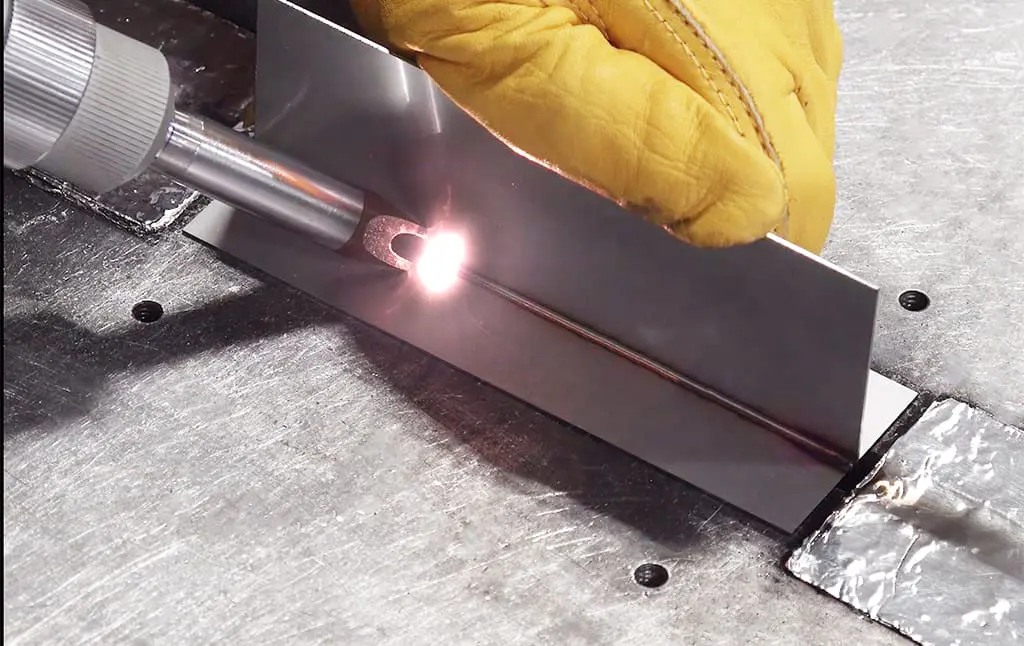
Laser welding uses concentrated optical radiation to heat a small joining zone. Automated enclosed systems can separate people effectively, but open-beam, hand-held or maintenance conditions may create direct and reflected beam hazards. Some wavelengths are invisible, so an exposed person cannot rely on glare or a blink response as warning.
Neither technology is automatically safer. Risk depends on how energy and contaminants can reach people, which modes are accessible and whether safeguards remain effective during setting, fault finding, cleaning and maintenance.
The UK Legal Framework
The Health and Safety at Work etc. Act 1974 and Management of Health and Safety at Work Regulations 1999 provide general duties to assess and control risk. The Control of Substances Hazardous to Health Regulations 2002 (COSHH) apply to welding fume and gases. HSE states that all welding fume can cause lung cancer, including fume from mild steel. The Control of Artificial Optical Radiation at Work Regulations 2010 apply to hazardous artificial optical radiation from lasers and welding arcs. Employers must assess risk, prevent or reduce exposure, provide information and training and, where appropriate, use health surveillance. Exposure limit values are set by the Regulations, but good control should prevent accessible hazardous beams rather than treating limits as routine targets. The Provision and Use of Work Equipment Regulations 1998 require suitable, maintained equipment with effective controls and safeguards. The Dangerous Substances and Explosive Atmospheres Regulations 2002 may apply to gases, vapours, combustible materials and explosive atmospheres. PPE duties apply only after higher-level measures have addressed residual risk.
Assess the Welding Fume
Identify parent metal, consumable, coating, surface contamination and process. Stainless steel, hardfacing alloys, galvanised material and painted components can generate different contaminants. Laser welding may create a narrow weld, but high energy density, vaporisation and plume behaviour still require assessment.
Observe source location, welder posture, torch orientation, enclosure and airflow. Include tack welding, cleaning, grinding and rework. Short visible weld time does not prove insignificant exposure if the plume enters the breathing zone or repeated tasks accumulate across a shift.
Indoor welding requires suitable engineering control, normally local exhaust ventilation (LEV). Capture should be close to the plume without disturbing shielding gas. On-torch extraction, movable capture hoods or partial enclosure may be appropriate. General ventilation alone is rarely sufficient for a concentrated source.
Where LEV cannot adequately control residual fume, provide suitable respiratory protective equipment (RPE). Tight-fitting RPE requires face-fit testing for the exact make, model, type and size, and a clean-shaven sealing area. Powered equipment may suit longer tasks, but selection must consider protection factor, compatibility and welding conditions.
Exposure monitoring can determine whether controls answer a defined question, such as comparing processes or checking a difficult task. Use personal sampling in the breathing zone and interpret results against current EH40 workplace exposure limits and the requirement to reduce carcinogenic exposure as low as reasonably practicable.
Control Arc and Optical Radiation
Arc welding emits intense ultraviolet, visible and infrared radiation. Direct viewing can cause photokeratitis, while reflected radiation can expose nearby workers. Screens should contain the arc without creating collision, ventilation or fire hazards. Everyone with a line of sight needs protection, not only the welder.
Select welding filters for the process and current, using applicable standards and manufacturer information. Auto-darkening filters need the correct shade range, sensor arrangement, response and condition. The helmet must also protect against spatter and impact. Safety spectacles may remain necessary beneath the helmet for chipping or grinding.
Cover exposed skin with suitable flame-resistant clothing and protect the neck. Ordinary thin fabrics may not resist ultraviolet radiation, sparks or molten metal. Inspect helmets, filters and clothing and replace damaged items.
Control Laser Radiation at Source
Laser classification communicates potential hazard under specified conditions, but the workplace assessment must consider the complete installed system. Identify wavelength, maximum accessible emission, pulse or continuous mode, beam diameter, focusing optics, workpiece reflectivity and foreseeable faults.
The preferred control is a fully enclosed laser cell that prevents access to hazardous radiation. Interlocks should stop or reduce emission when access doors open. Fixed guards, beam stops and enclosed paths should contain direct and specular reflections. Matt surfaces may reduce mirror-like reflection but do not make a powerful beam harmless.
Establish a controlled area where hazardous radiation could be accessible. Restrict entry, use warning indicators and prevent unauthorised operation. Key control, permissions and documented operating modes help ensure that alignment or service settings are not used during production.
Interlocks are safety functions and need validation, inspection and proof testing. Defeating an interlock for convenience is a significant failure. Where bypass is genuinely necessary for competent maintenance, use a separately assessed procedure with reduced power, beam termination, controlled access and specialist supervision.
Laser protective eyewear is a residual or maintenance control. It must match wavelength and required optical density while preserving sufficient visible transmission. A generic “laser helmet” is not suitable for every system. Eyewear does not protect unshielded skin or other people and can fail if scratched, contaminated or incorrectly marked.
Fire, Electricity and Gas
Both processes can ignite combustible material. Remove or protect combustibles, control sparks and hot metal, and use a permit-to-work system where appropriate. Inspect concealed spaces and the opposite side of a joint. Provide a fire watch and post-work checks based on the risk, not a standard signature alone.
Arc equipment presents electric-shock risk, particularly in damp, conductive or restricted locations. Maintain leads, connectors, electrode holders and return paths. Isolate before maintenance and control stored energy. Laser systems may contain high-voltage supplies, capacitors, robotics and cooling systems requiring defined isolation.
Shielding gases can displace oxygen in enclosed or poorly ventilated spaces. Cylinders require secure storage, correct regulators and protection from damage. Confined-space work requires avoidance where reasonably practicable and a specific safe system and rescue arrangements where entry cannot be avoided.
Automation and Robotics
Laser welding frequently operates with robots or moving stages. Guard against crushing, trapping and unexpected motion as well as beam access. Define safe positions, interlock access and control restart. Isolation must address electrical, pneumatic, hydraulic, gravitational and optical energy.
Collaborative operation does not remove laser or hot-process risk. The robot’s force-limiting features cannot make an accessible hazardous beam safe. Integrate machinery, laser and fume controls into one risk assessment and verify the combined system after modification.
Training, Supervision and Change Control
Training should match role. Operators need normal controls, warnings, defect reporting and emergency action. Setters and maintenance staff need deeper knowledge of modes, bypasses, isolation and optical hazards. A competent laser safety adviser can support higher-risk systems, but operational responsibility remains with the employer.
Maintain an inventory of welding systems, materials, controls and assessments. Apply formal change control when a new alloy, coating, gas, laser source, focusing head, programme or enclosure is introduced. A small parameter change can alter plume, reflection or accessible energy.
Review near misses, fume observations, damaged screens, interlock faults and unexpected reflections. Health surveillance may be appropriate where the COSHH or optical-radiation assessment indicates risk. Workers should report eye symptoms, respiratory concerns or skin effects promptly.
Verify the Whole Control System
Commission LEV with performance measures that operators can check. Thoroughly examine and test it at required intervals and after significant change. Verify laser safeguards in every operating mode, including foreseeable fault and maintenance conditions. Test emergency stops and interlocks according to a documented schedule.
Sysco Environmental can support welding-fume exposure assessment and practical control evaluation. Optical laser safety and machinery validation may also require specialist competence appropriate to the installed system. The objective is a joined-up assessment, not separate files that miss interactions.
Laser and arc welding create different dominant hazards, but the control principle is consistent: contain energy and contaminants at source, restrict access, maintain safeguards and use PPE only for the residual risk that remains.
Before production starts, confirm that the risk assessment, operating instructions and emergency arrangements describe the machine actually installed. Supplier documentation should inform this check, but workplace commissioning must verify real materials, settings, access routes and foreseeable human intervention.