

What Is Welding Really Putting Into the Air?
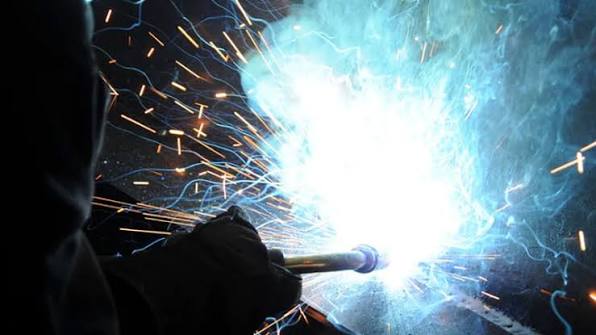
Welding risk extends beyond visible sparks. UK employers must control carcinogenic welding fume under COSHH while also managing fire, electrical, optical-radiation, gas-cylinder and confined-space hazards.
In Brief
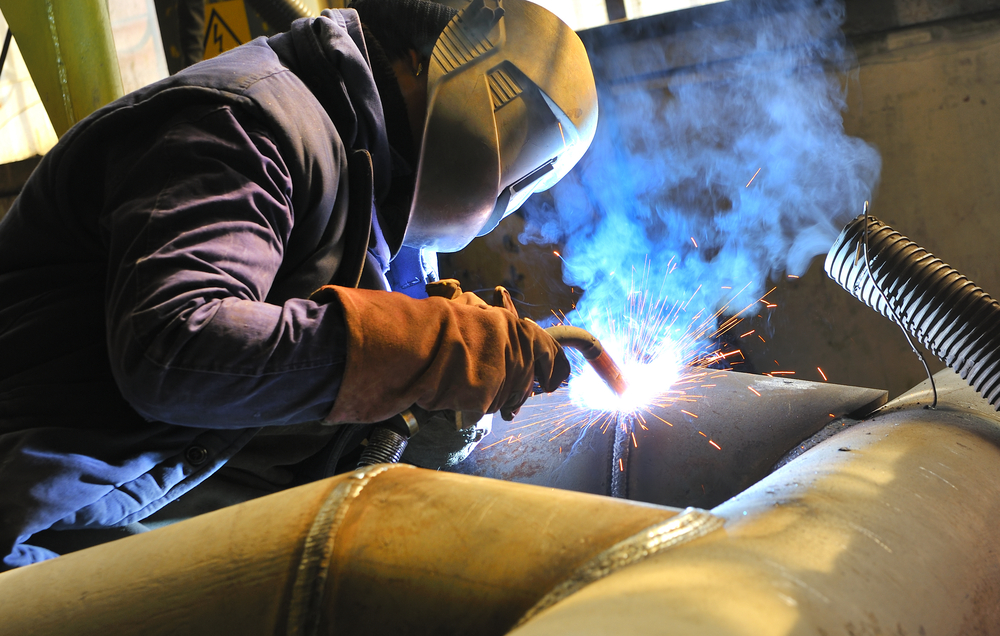
- HSE states that all welding fume can cause lung cancer. Controls are required even for occasional mild-steel welding.
- Elimination or a lower-fume method should be considered first. Indoor welding normally requires effective local exhaust ventilation, with suitable RPE where LEV alone does not adequately control exposure.
- A complete assessment must also cover hot work, ultraviolet radiation, electric shock, compressed gases and oxygen displacement in enclosed spaces.
At Sysco Environmental, we recommend separating the assessment into connected hazard pathways. Fume control cannot be judged from the visibility of the plume alone, and a successful fume assessment does not establish that fire, radiation or confined-space risks are controlled.
Treat All Welding Fume as a Serious Health Risk
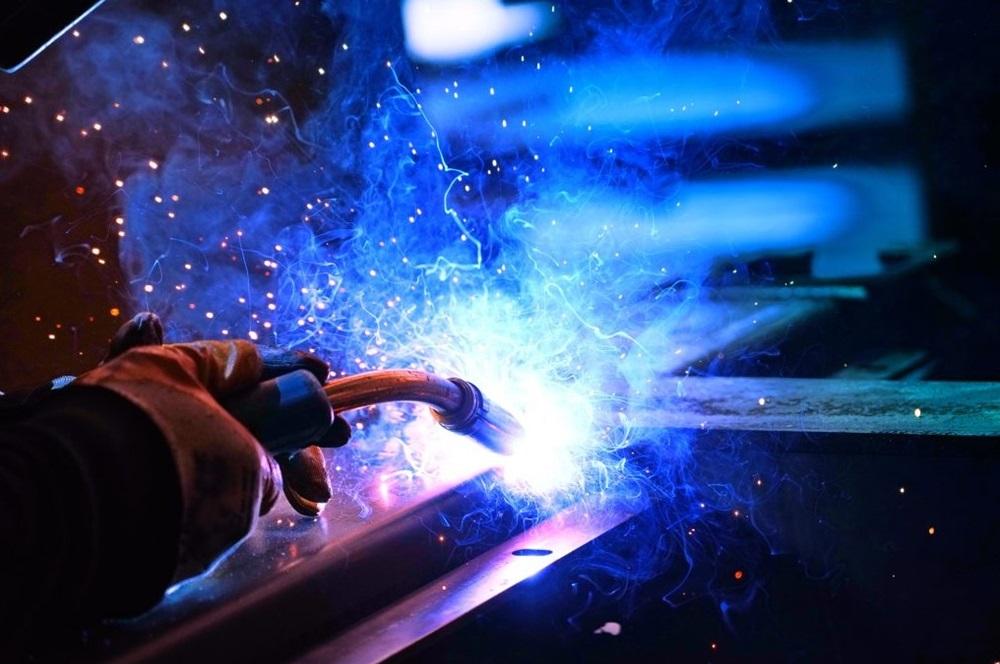
The fume is a complex mixture of fine particles and gases. Its composition changes with the process, consumable and material. Stainless-steel welding may introduce chromium and nickel, while coatings, paint, oil or cleaning residues can generate additional hazardous substances.
Workplace exposure limits
(WELs) in EH40 may apply to individual constituents. Compliance with a limit is not a general declaration that welding fume is safe. Carcinogens, mutagens and asthmagens require exposure to be controlled as low as is reasonably practicable alongside the other COSHH duties.
Northern Ireland applies COSHH (Northern Ireland) 2003. HSENI likewise advises that welding-fume exposure requires suitable control and may require occupational hygiene monitoring.
Characterise the Actual Work A suitable assessment should consider:
- welding and allied processes used;
- duration, frequency and production volume;
- parent metal, consumable, flux and surface coating;
- component size and welding position;
- indoor, outdoor, restricted or confined location;
- nearby workers and other trades;
- existing LEV, general ventilation and RPE;
- cleaning, cutting, gouging and grinding; and
- foreseeable changes, faults and maintenance.
The welder’s head position and extraction placement can determine whether fume enters the breathing zone. Outdoor work is not automatically controlled: wind direction and variability may carry the plume towards the welder or other people.
Apply the Hierarchy of Control
First consider whether welding can be avoided through a cold-joining or prefabrication method. If not, examine lower-fume processes, consumables, settings and work sequences. Remove hazardous coatings or contamination safely where this reduces the substances generated.
For indoor work, use effective local exhaust ventilation (LEV) to capture fume at source. The hood or on-torch system must suit the process and remain positioned so that capture is maintained throughout the weld. General ventilation supports control but is not a substitute for effective capture where LEV is required.
If LEV alone cannot adequately control exposure, or its provision is not reasonably practicable for the task, provide suitable respiratory protective equipment (RPE). Selection should account for the particulate and gaseous hazards, duration, required protection factor, compatibility with the welding visor and the wearer.
Tight-fitting RPE requires face-fit testing and a clean-shaven sealing area. Powered or air-fed equipment may be more appropriate for longer-duration work or where other PPE must be integrated. RPE must be supported by training, supervision, maintenance and storage.
Verify That Controls Work
Occupational hygiene monitoring may be required to characterise personal exposure, assess constituents with workplace exposure limits or investigate whether controls are adequate. The strategy should be representative and linked to a decision, such as improving extraction, changing RPE or determining whether health surveillance is required.
Local Exhaust Ventilation must be maintained and thoroughly examined and tested at least every 14 months unless a different statutory interval applies. Day-to-day checks are also needed. A current examination label does not prove that a movable hood is positioned correctly during each weld.
Control Hot-Work and Physical Hazards
Electric-arc equipment introduces shock and burn risks. Leads, holders, return connections and power sources should be suitable, maintained and protected from damage and wet conditions.
The arc produces intense optical radiation. Suitable welding filters, helmets, clothing and screens protect the welder and nearby people from ultraviolet and infrared radiation, burns and spatter. Screens must not obstruct ventilation or create a new fume-accumulation problem.
Noise from welding, cutting and preparation may require assessment under the Control of Noise at Work Regulations 2005. Manual handling, awkward posture and vibration may also be material parts of the task.
Recognise Confined-Space and Asphyxiation Risk
Shielding gases such as argon can displace oxygen without providing sensory warning. They may collect in pits, vessels and other enclosed or low-lying areas. Welding can also consume oxygen or generate hazardous gases.
Where work falls within the Confined Spaces Regulations 1997, entry should be avoided where reasonably practicable. Unavoidable entry needs a safe system of work and suitable rescue arrangements prepared before entry. Atmospheric testing, ventilation and breathing apparatus may be required according to the assessment.
Never use oxygen to improve the atmosphere. Oxygen enrichment increases fire risk and can cause materials to burn violently.
Train, Supervise and Review Workers should understand the health and physical hazards, how their process affects fume generation, correct LEV positioning, RPE use, hot-work controls and the conditions requiring work to stop.
Review the assessment when the process, consumable, material, coating, workload, location or controls change. Symptoms, visible escape of fume, failed extraction, monitoring results or a fire-related event should also trigger review.
Sysco Environmental can help employers design representative exposure monitoring and interpret whether control measures are performing under real working conditions. The goal is a measured, defensible assessment that converts observations and sampling results into prioritised improvements.
Effective welding safety comes from controlling the entire task—not from relying on a visor, respirator or extraction unit in isolation.